Investors weigh escalating conflict in Gulf 

Investors weigh escalating conflict in Gulf 

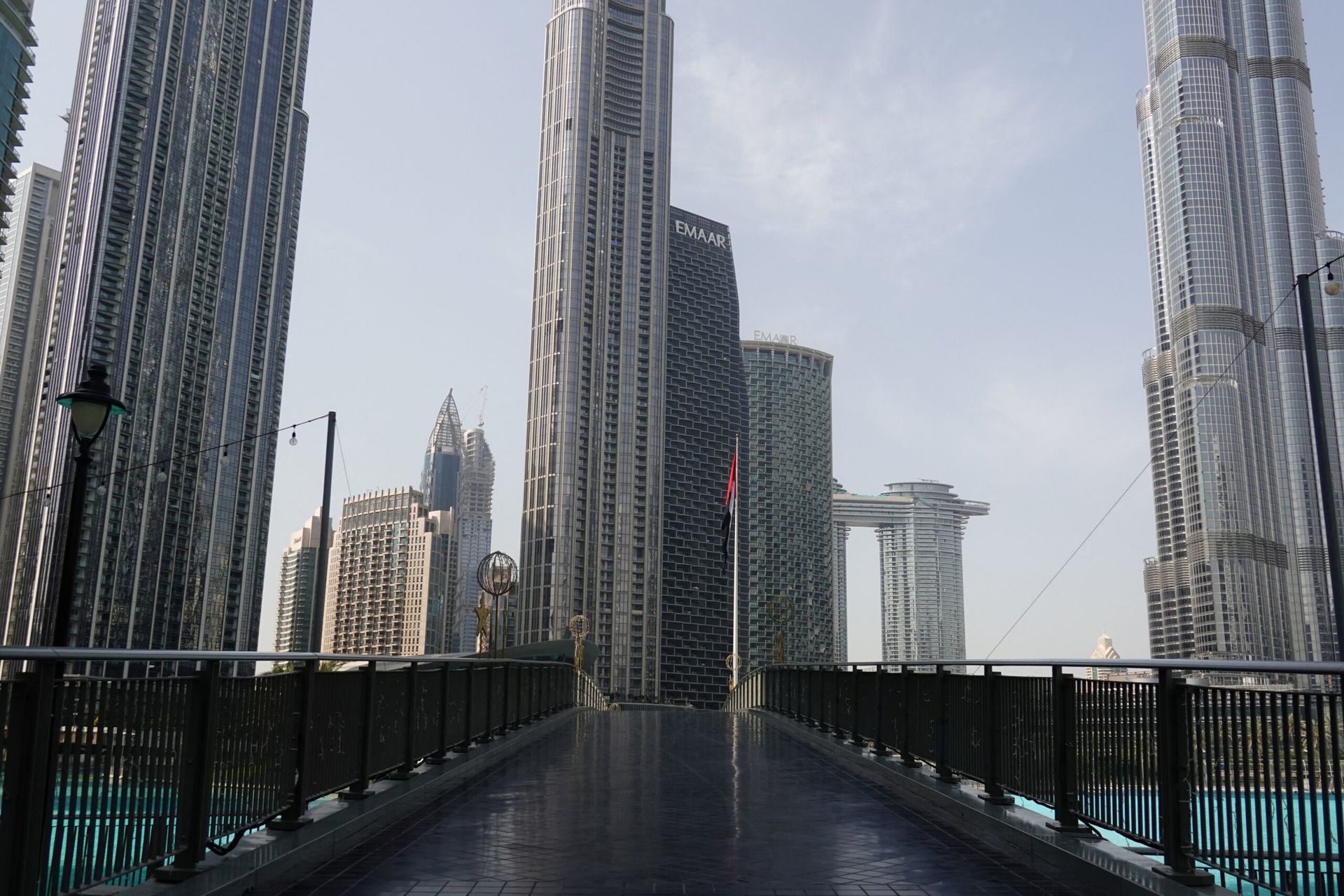
An empty area near Burj Khalifa, after an Iranian attack, following United States and Israel strikes on Iran, in Dubai, United Arab Emirates, March 1, 2026. REUTERS/Amr Alfiky

The latest conflict to erupt across the Gulf followed weeks of US military buildup and negotiations over Iran’s nuclear programme. Amid concerns that it could escalate into a broader regional conflict, investors and businesses across Asia are bracing for further adverse impact from prolonged disruptions to oil and trade flows. 

Private capital allocators in South and Southeast Asia, already wary of making fresh commitments amid a dearth of distributions, are likely to be even more cautious and selective, while fund managers are closely monitoring portfolio companies with exposure to global trade flows, and particularly to the Gulf region.

“The longer it continues, the more it is going to drag everything down – investments, trade, and potentially push the global economy into a recession,” one capital allocator said.

Further, there are questions about how, if at all, it would affect the Gulf region as a venue for capital deployment as well as outbound allocations, given that the emirates have emerged as major backers of both managers and companies across Asia

Just a month ago, the Qatar Investment Authority said it would expand its fund-of-funds programme, aimed to attract foreign venture capital firms into the emirate, by $2 billion from its initial $1 billion.

In December, Abu Dhabi’s Mubadala Investment Company announced co-investment partnerships with Bain Capital and Barings.

Also in December, Indonesia’s Danantara acquired a package of hospitality and real estate assets in Makkah, Saudi Arabia.

Overall in 2025, private capital deal value in the Gulf region ballooned to $20.3 billion, from just $6.8 billion a year earlier, according to data from the Global Private Capital Association.

Fund managers in India, for one, told DealStreetAsia they worry that any sustained instability in the region could slow the pace of such allocations even if the country’s structural growth story remains intact.

To be sure, such an event may already have been priced into investors’ planning, to some extent.

“It reinforces the view that many investors and advisors have taken in recent years – that geopolitical risk is a permanent and persistent feature of the operating environment, and factored and priced directly into investment thesis and strategies,” said Charlie Warren, managing director of global advisory firm Secretariat. 

How much impact there will be on long-term allocations would depend on how much the conflict materially affects logistics, aviation, financial services, and energy infrastructure in the Gulf Cooperation Council region, Warren added. 

For now, there are estimates that the supply of some 17 billion barrels of crude oil, or more than five months’ worth of global crude demand, could be affected. And a bulk of that supply flows to Asia, which sources 60% of oil from producers in the Gulf.

“There are warnings about OPEC’s capacity to significantly increase output and to ship this oil to the market while the Strait of Hormuz — partly controlled by Iran — is now effectively closed,” Ipek Ozkardeskaya, Swissquote senior analyst, said in an emailed note. 

Ozkardeskaya noted that about 20% of global oil flows transit the Strait of Hormuz, 45% of energy exports are destined for China, more than 80% of LNG exports head toward Asia, and around 30% of Australian refined oil passes through the Strait. 

At the same time, there is now a taste of how severe a disruption to aviation in the Gulf can be. Thousands of flights worldwide have been cancelled as the commercial airspace above the region is closed.

“The sentiment that is held globally about the [Gulf] region will change as a result of this conflict,” said Niamh McBurney, Associate Director, Middle East and North Africa at Control Risks Group, adding that it could affect the Gulf countries’ economic transformation programmes to attract global talent, capital, and businesses into the region.

“I do expect there to be a degree of a long tail of economic impact now in the UAE, specifically Dubai, where the aviation sector accounts for about 30% in any given year. When the airport closes, things stop moving. Money stops moving, proverbially and literally, [so] there is going to be a significant economic impact,” McBurney said.

“Any transaction with exposure to the Middle East or critical supply routes is now subject to a significantly higher bar in terms of diligence, valuation and structure. Investors are recalibrating risk – not retreating, but pricing and structuring for uncertainty,” said Karen Patricia Rogacion, Partner, M&A, Corporation Finance at pwc Philippines.

Still, Rogacion added: “At this stage, the conflicts in the Gulf are acting more as a risk filter than a stop sign for M&A.”  

Meanwhile, some fund managers are already actively working to limit the impact of the situation on their portfolio companies. 

“What is relevant to Navis are more the immediately predictable micro-effects on specific portfolio companies, because these are things that we can, and should respond to immediately,” said Nicholas Bloy, co-founder and managing partner of Malaysia-based private equity firm Navis Capital. 

Bloy told DealStreetAsia how the firm has worked to help ensure its portfolio company – snack company Dan D Foods – has secured an alternative supply of pistachios, even before. Iran produces 20% of the global crop. “I prefer this kind of analysis and action, as opposed to prognostication and hand-wringing at a more macro-level,” Bloy said.

In his view, the conflict would have a limited impact on global allocations to Southeast Asia, where the firm focuses its investments. “I think Southeast Asia is really only affected by second or third-order effects – some global demand destruction from sustained higher oil prices would slow down export growth, for example.”

Added Bloy: “I certainly do not think it is something the world cannot get through relatively straightforwardly, in comparison to other black swan [events] over the last 20 years.”

So, while there may be short-term ‘tactical’ repositioning in terms of exposure, long-term capital allocations could remain intact. “Institutional capital responds to sustained risk, rather than single incidents,” Secretariat’s Warren said. 

But ultimately, with such conflicts, Warren added, “there are no winners.”

Edited by: Padma Priya

Bring stories like this into your inbox every day.

Sign up for our newsletter - The Daily Brief
Subscribe to Newsletter


This is your last free story for the month. Register to continue reading our content