ADB urges govts, private capital to share risks in Asia’s power grid buildout

ADB urges govts, private capital to share risks in Asia’s power grid buildout

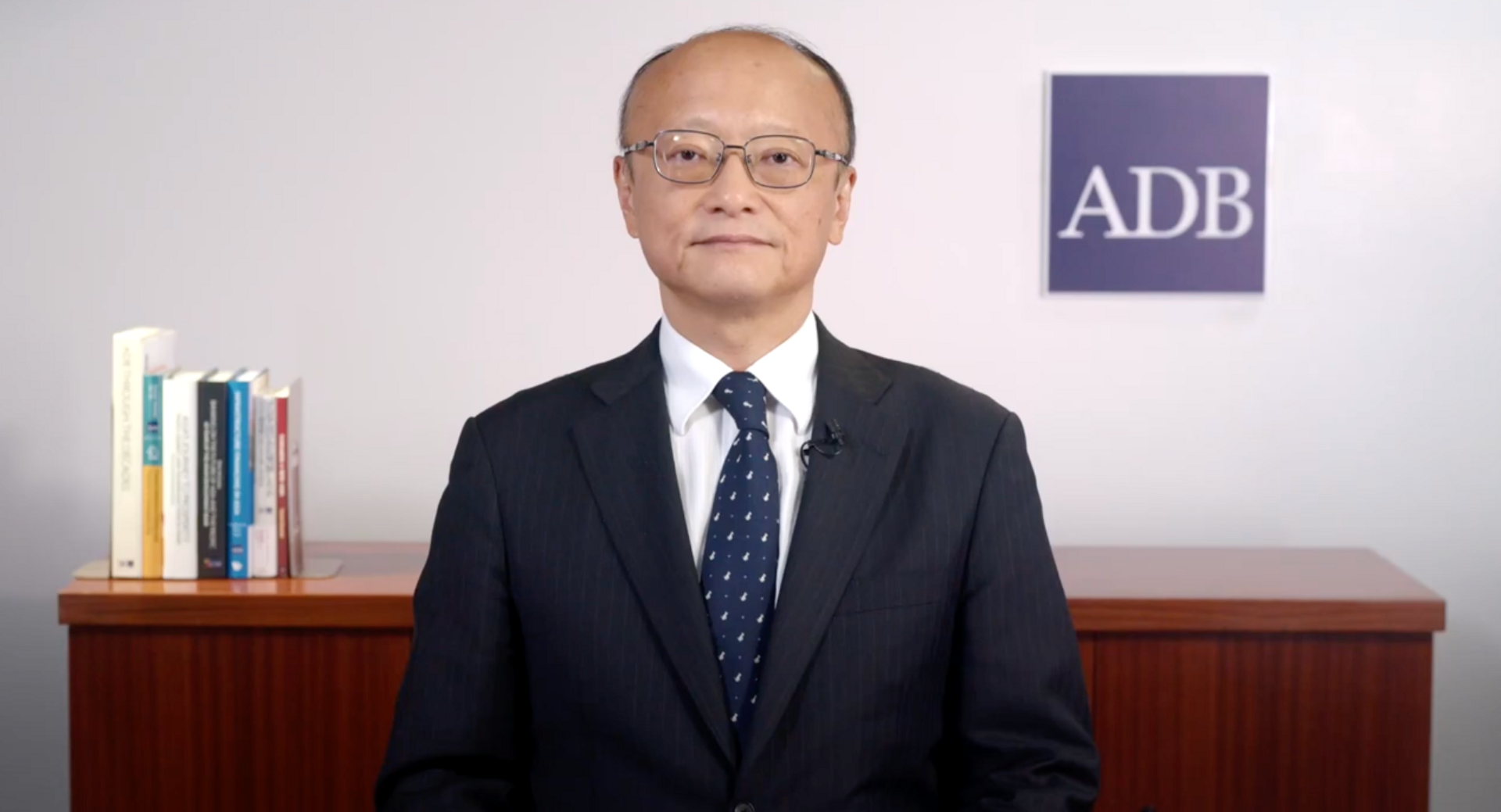
Asian Development Bank (ADB) President Masato Kanda

The Asian Development Bank (ADB) has urged governments, shareholders, and private capital providers to share risks in Asia’s power grid buildout, warning that public resources alone will not be enough to finance the region’s energy transition.

Speaking at the Asia Clean Energy Forum 2026, ADB president Masato Kanda said the region’s energy sector is facing a “new normal” marked by geopolitical shocks, rising power demand, heatwaves, and the rapid expansion of power-intensive AI data centres.

“We are living through a new normal defined by compounding global shocks and our energy sector is standing right in the front lines,” Kanda said.

He said geopolitical disruptions are moving through the “arteries” of Asian economies, affecting fuel, freight, finance, and factories, while also raising trade uncertainty and household costs.

“At the same time, we are facing an unprecedented staggering surge in electricity demand. This isn’t just being driven by rapid urbanisation; it is being fueled by the explosive expansion of power-intensive AI data centres and deep electrification of our economies,” Kanda said.

“Add to that, the severe heat waves currently straining our domestic grids, and the reality becomes obvious. National energy systems simply can’t keep up on their own,” he added.

But financing remains a major hurdle.

“Let me be frank about the financing. Public resources alone can’t fund this future. Fiscal space is tightening across all governments, debt burdens are mounting, and traditional priorities are shifting,” Kanda said.

“The large pool of capital required for this transition exists right now in the private sector. The problem isn’t the lack of global capital; it is a lack of an enabling environment and the absence of real derisking mechanisms,” he said.

For its part, Kanda vowed to mobilise a significant part of ADB’s funds to de-risk investments in this sector. The bank is increasing its private sector financing to reach $13 billion annually by 2030.

In 2025, $23.5 billion of ADB’s commitments went to public sector programmes and projects, while $5.5 billion was directed to the private sector.

“We will use blended finance, first-loss capital, and expanded guarantee instruments to drive the risk premium down and bring private capital alongside public funding. We will do the hard work upstream to make these massive regional public goods genuinely bankable. But we need our shareholders and our partners to step up with us,” Kanda said.

He called for more capital for guarantee instruments and co-financing to distribute the scale of the challenge across the broader development ecosystem.

ADB has already been using guarantees, concessional finance, and credit insurance to lower risks for private investors in energy projects.

In a separate panel in the Asia Clean Energy Forum, Isabel Chatterton, director general of ADB’s Private Sector Operations Department, said partial credit guarantees can cover off-taker nonpayment risk and “bring alongside our financing other private sector financiers.”

She cited the Innovative Finance Facility for Climate in Asia and the Pacific (IFCAP), a guarantee facility where every dollar of partner guarantee can mobilise up to $4.50 in ADB climate lending; a $2.75-billion master credit insurance programme with 10 global insurers; and the Monsoon Wind project in Lao PDR, where ADB used $60 million in concessional finance to de-risk curtailment risk.

Chatterton also outlined ADB’s expectations for governments and private companies, saying both sides must help reduce risks that keep capital away from first-of-its-kind energy projects.

Governments, she said, expect private companies to be willing to share risks at the right stage of a project.

“They really do not expect companies to absorb all the risk, but equally they don’t expect companies to expect the government to absorb all the risk,” Chatterton said.

As an example, Chatterton cited the Philippines’ $250-million geothermal de-risking facility, which she said covers 50% of exploration drilling costs. “The facility helped revive a geothermal pipeline that had been dormant in the country since around 2012,” she said.

Private companies, in turn, expect governments to provide stable regulatory frameworks and reduce uncertainty, Chatterton said. This includes clear laws and regulations, transparent rules, standardised power purchase agreements, and credible dispute resolution systems.

Edited by: Padma Priya

Bring stories like this into your inbox every day.

Sign up for our newsletter - The Daily Brief
Subscribe to Newsletter


This is your last free story for the month. Register to continue reading our content