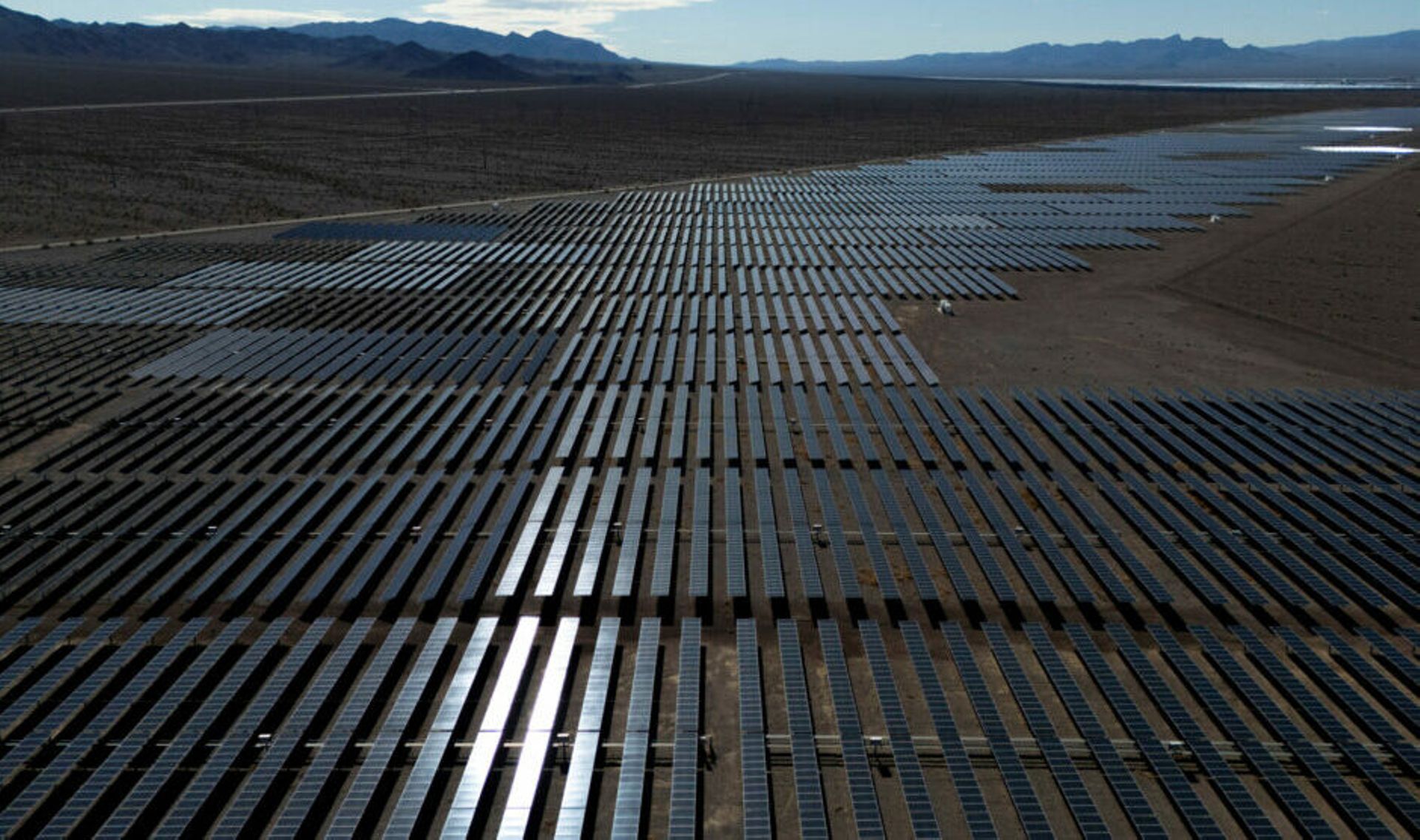
Indian makers of solar panels are being forced to shut factories as they face waits stretching up to eight months for domestic components to replace Chinese imports as the government pushes to beef up domestic manufacturing, industry sources say.
The disruptions, triggered by rules that took effect on June 1, threaten thousands of jobs and investment of nearly $4 billion, manufacturers and analysts said, while imperilling India’s 2030 target to boost solar energy capacity.
“We have suffered a lot due to the domestic cell unavailability for the past three months,” said Shailendra Shukla, chairman of Icon Solar, a module maker, who expects production to shrink sharply to about 1 GW from 3.2 GW.
Nearly a third of India’s 140 small- and medium-sized solar panel makers, which make up 60% of manufacturing capacity, have halted output and the rest cut cycles to three to four days, the All India Solar Module Manufacturers Association told Reuters.
Manufacturers lacking facilities to make their own cells said they face waiting periods of up to six to eight months for domestic cells, which boost the cost of domestically made solar panels to almost double those that use Chinese cells.
India’s clean energy ministry said it had not received formal reports about production halts by standalone makers of solar modules but was keeping watch on prices, while expecting adequate cell manufacturing capacity within six months.
But India is struggling to boost supply because building technology-intensive solar cell factories needs time and China has curbed exports of solar manufacturing technology, equipment and technical support, the industry sources said.
DELAYS COULD PUT 2030 TARGET OUT OF REACH
The shortages stand to delay solar projects and boost costs, possibly slowing India’s push to establish 500 gigawatt of non-fossil fuel capacity by 2030, the industry sources and analysts said, from 288 GW now.
Growing electricity demand means a slowdown in solar deployment will have to be offset by greater use of fossil fuel-based generation, primarily coal, delaying the switch to cleaner energy.
Solar accounts for about 29% of India’s non-fossil fuel power capacity and is expected to expand to more than 292 GW by 2030 from the current 162 GW, the Central Electricity Authority says.
While Indian firms have built up solar panel manufacturing capacity of about 200 GW, they can produce only 27 GW of solar cells, the government estimates.
The gap yawns wider in practice, with effective operating cell manufacturing capacity of only around 16 GW to 18 GW, said German-based EUPD Research and the industry sources.
The government’s figures reflect installed, or nameplate, capacity, much of which is not yet operational or is running well below rated levels, they said.
“India faces a steep cell supply deficit and closing that gap will likely take three to five years,” said Rajan Kalsotra, senior consultant at EUPD Research.
That time would be needed to build new cell facilities, which requires significant capital, technology partnerships and lengthy commissioning periods, he added.
“With China controlling much of the global solar manufacturing equipment and technology ecosystem, rapidly scaling local cell production will remain challenging.”
CHINA EXPORT CURBS HINDER EXPANSION
India relies on China for about 95% of solar cell imports, industry estimates show. Such imports rose 37% in the last fiscal year to about $1.86 billion on the year.
But China monitors technology exports to India and curbs equipment sales, said the industry sources, who spoke on condition of anonymity as the matter is a sensitive one.
China’s export curbs would delay setting up cell manufacturing plants, six manufacturers told Reuters, also seeking anonymity, for fear of Chinese government reprisal.
“Over the long term, China is likely to seek to preserve its dominance of the solar industry, where it already has a strong grip on most manufacturing segments,” said Cosimo Ries, analyst at policy consultancy Trivium China.
China’s commerce ministry did not respond to Reuters’ requests for comment.
CELL SHORTAGE RAISES COSTS, THREATENS JOBS
At least three solar module makers Reuters spoke to have temporarily halted production for lack of domestically made cells, while four more have cut capacity to about a third.
Bringing new cell manufacturing capacity online takes far longer than the government expects, the manufacturers said.
“It is impossible to start producing cells with 18 months’ notice due to complicated technology, manufacturing needs like land and sourcing raw materials,” said Chetan Shah, chairman of solar panel producer Solex Energy SOEX.NS.
He was referring to the government’s June 2026 deadline for the use of domestically made solar cells, set in December 2024.
India has extended the date to December 2026 for some projects, citing industry concerns over shortages and the need to protect manufacturers’ investments.
The makers’ association said the waiver would bring limited relief, however, unless extended to the entire industry.
Standalone module makers without cell manufacturing capability employ about 75,000 people, including 45,000 alone in Prime Minister Narendra Modi’s western home state of Gujarat, according to a state industry group.
Power producers could face a short-term increase of about 35% in capital expenditure costs until domestic cell making capacity scales up, said Pinaki Bhattacharyya, chief executive of power producer AMPIN Energy Transition.
Reuters