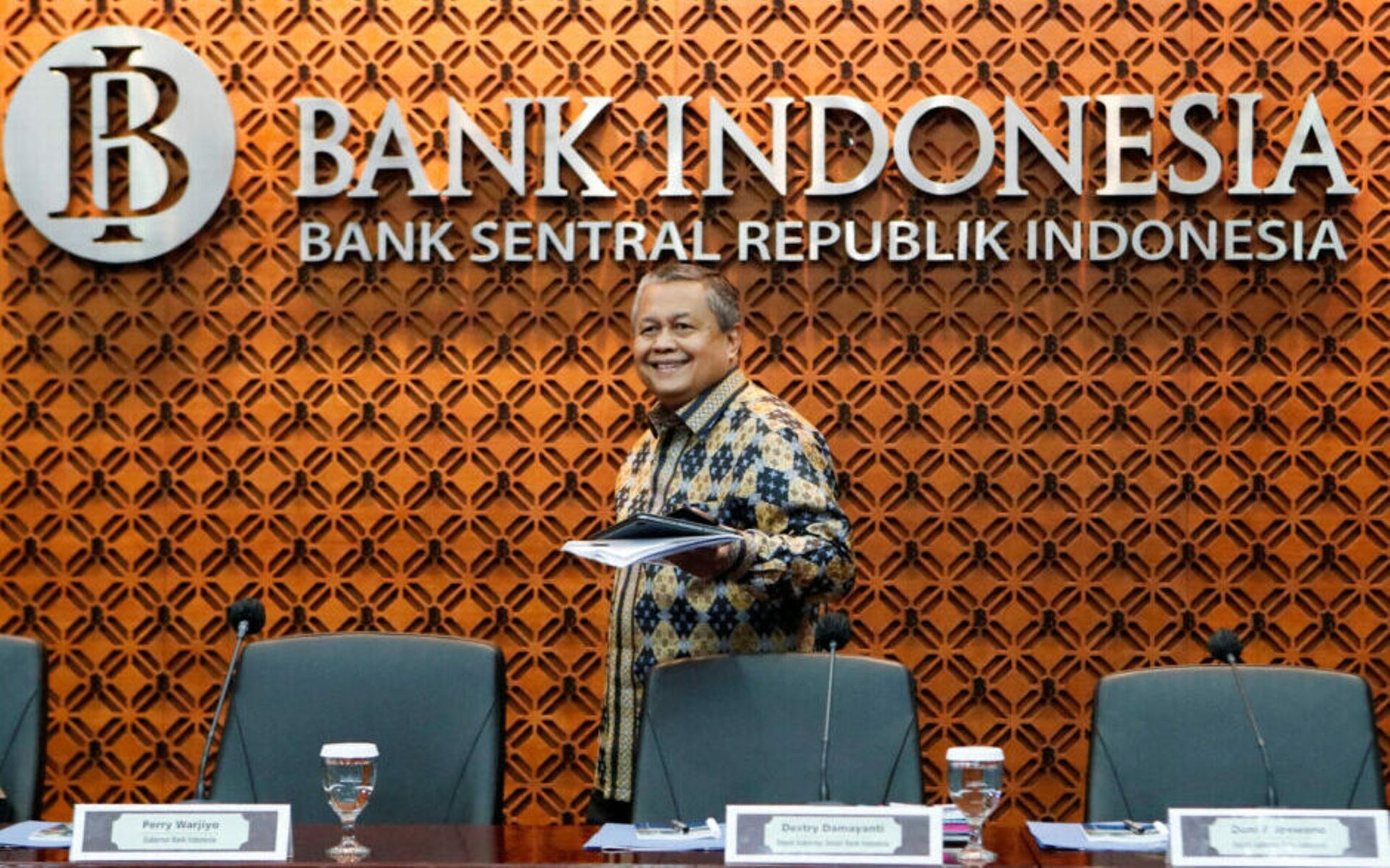
Ratings agency S&P said the surprise resignation of Bank Indonesia governor may contribute to greater uncertainty regarding the future direction of monetary policy, but the change in personnel does not impact its ratings on Indonesia.
Indonesia’s central bank governor Perry Warjiyo stepped down on Monday, in a surprise move that weighed on Indonesian assets as analysts and investors expressed renewed concerns about the central bank’s independence.
S&P affirmed Indonesia’s BBB/A-2 sovereign credit ratings with a stable outlook earlier this month, saying recent fiscal strains should be temporary—a boost to Southeast Asia’s biggest economy after a series of setbacks this year.
“The change in personnel at Bank Indonesia does not have a direct impact on our ratings on Indonesia. However, it may contribute to greater uncertainty regarding the future direction of monetary policy and the authorities’ policy response to evolving economic conditions,” Rain Yin, a sovereign analyst at S&P Global Ratings, said in an email.
“Our ratings and outlook on Indonesia reflect our expectation that pressures on the fiscal and external accounts will ease over the coming months as the pace of policy changes stabilises and implementation risks subside,” Yin said.
Bank Indonesia has been under pressure to support President Prabowo Subianto’s growth agenda, with the rupiah sliding to a historic low in June on concerns over both fiscal management and central bank independence.
“Even if there is a period of heightened market volatility, a recovery in underlying economic and fiscal trends would not, in itself, result in immediate rating implications” S&P’s Yin said.
“However, if we were to conclude that any deterioration in Indonesia’s fiscal or external metrics is becoming more prolonged or structural in nature, rather than temporary, this could increase downside risks to the rating over time.”
Fellow ratings agencies Moody’s and Fitch cut their debt rating outlooks for Indonesia to negative earlier this year, citing reduced policymaking credibility in the face of rising fiscal concerns under Prabowo.
Reuters