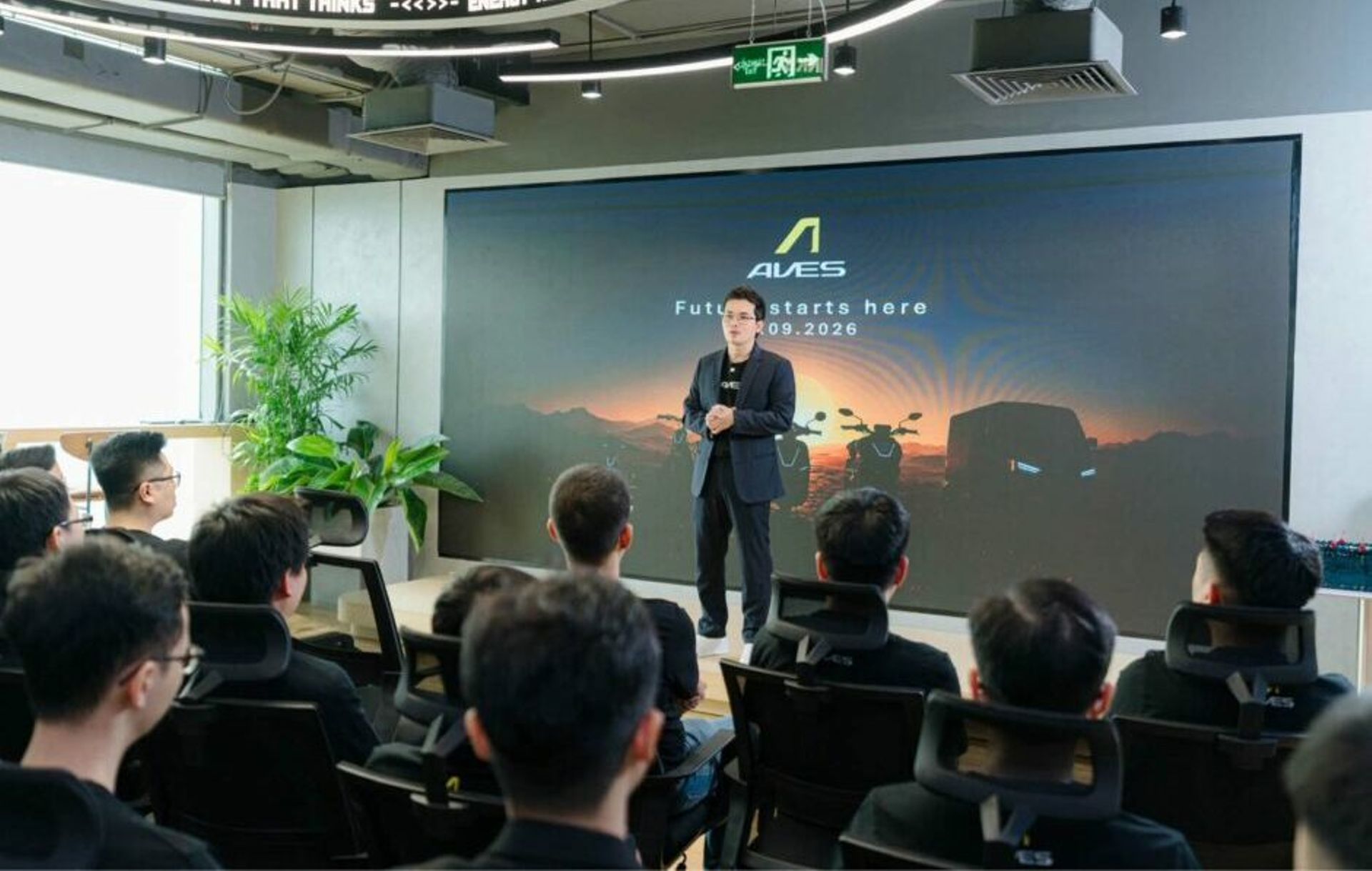
Nguyen Van Thanh, the former CEO of Vietnamese electric ride-hailing firm Green SM, has emerged as the controlling shareholder of a newly established electric vehicle startup that plans to launch its first products next year.
Thanh has invested 25.5 billion dong ($1.1 million) for an 85% stake in AVES Technology & Green Energy JSC, according to company registration information. The Hanoi-based company was incorporated on September 9 with a charter capital of 30 billion dong ($1.14 million).
AVES plans to develop and manufacture electric vehicles, with electric two-wheelers slated to be its first commercial products in the summer of 2027.
“We are a Vietnamese technology startup, focusing on the research, development and manufacturing of clean-energy products, from bicycles, electric motorcycles and electric three-wheelers to renewable energy solutions and smart technology devices,” Thanh said in an announcement on his social post.
The venture marks Thanh’s return to the electric mobility sector about three months after he stepped down as CEO of Green SM, the electric ride-hailing company under billionaire Pham Nhat Vuong’s Vingroup ecosystem.
Thanh joined the Vingroup ecosystem in 2019 and held management positions at VinBus and VinFast. He was involved with Green SM from its conceptual stage and spent more than three years building and running the company.
Between 2016 and 2019, Thanh held management roles at companies including Cargill Nutrition and Lazada Logistics. He was also named to Forbes’ 30 Under 30 Asia Class of 2022, which recognises young entrepreneurs and leaders across the region.
AVES has two other founding shareholders. Le Hoang Long invested 3 billion dong for a 10% stake, while Trieu Tuyen Hoang contributed 1.5 billion dong for a 5% holding.
Long, who serves as AVES’s co-founder and chief commercial officer, previously served as CEO of electric two-wheeler maker Pega, formerly known as Hkbike, and deputy CEO in charge of electric motorcycle sales at VinFast.
The startup is targeting three business areas — smart electric vehicles, renewable energy and Internet of Things devices — although electric mobility will be its initial commercial focus.
AVES plans to set up a research and development centre in Hung Yen province to undertake vehicle research, design, testing and prototype development ahead of commercial production. It has also begun hiring across mechanical engineering, quality control, supplier quality management, logistics and procurement.
AVES is also running a mobility design competition with total prizes of 265 million dong to source product concepts.
The new venture will give Thanh another shot at building an electric mobility business after more than seven years in the Vingroup ecosystem.
“I still wanted to challenge myself once again, to do something new, starting with ideas that exist only on paper and gradually turning them into real products,” Thanh said.