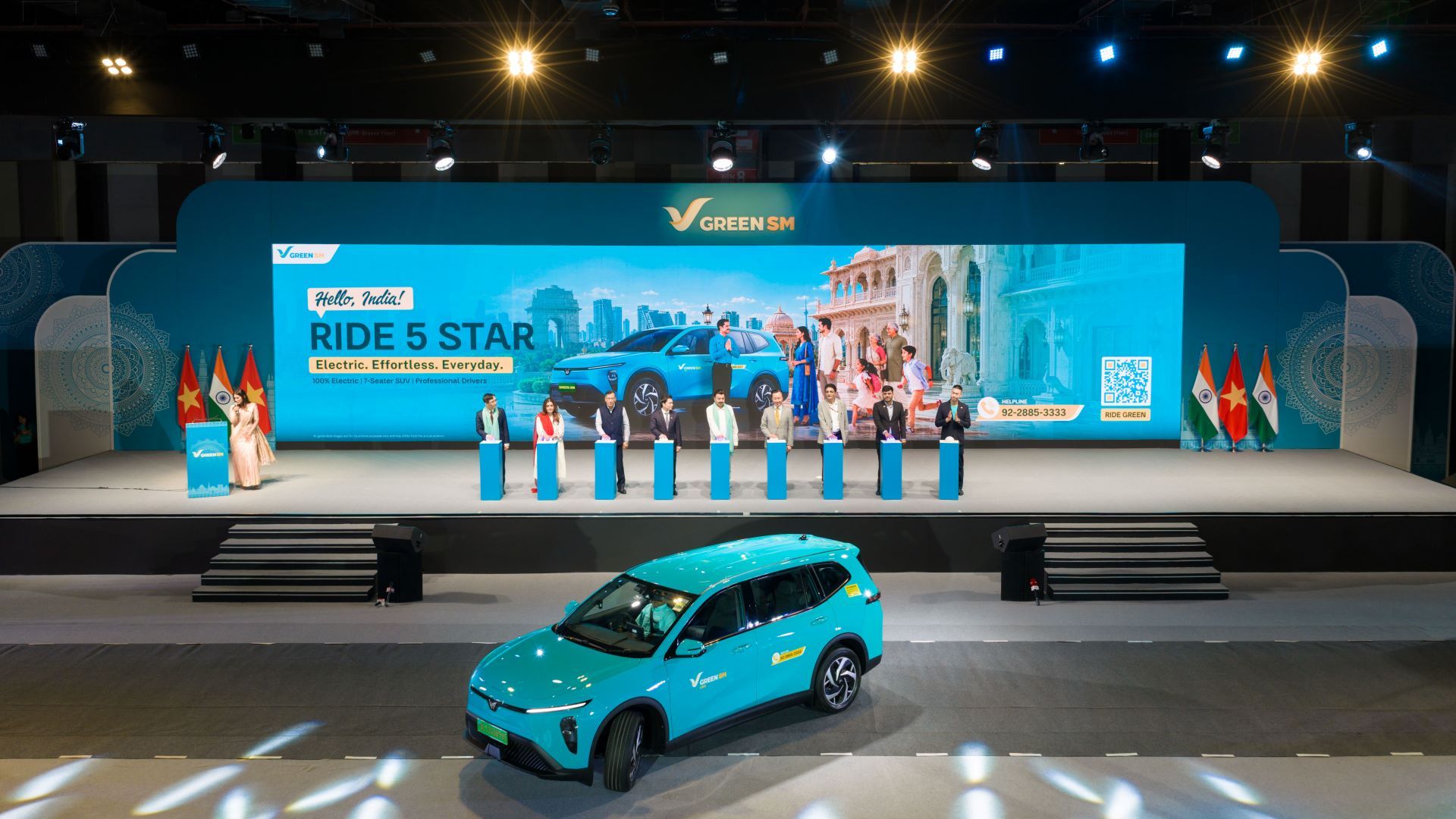
Vietnamese billionaire Pham Nhat Vuong’s electric ride-hailing service is facing taxi union backlash in India as the southern state of Karnataka halts its new registrations.
Green SM’s expansion into Bengaluru has triggered protests from traditional taxi drivers who are concerned that a new entrant could undermine their livelihoods, prompting the state government to suspend further on-demand electric taxis.
Karnataka’s Transport Department has reportedly directed officials to stop registering additional Green SM taxis until further notice, despite having earlier granted the company an aggregator licence valid until September 2031.
Local transport associations questioned whether Green SM has fulfilled all the regulatory requirements for operating taxis, and called on the government to review the approval.
Media reports stated that Green SM offers fares of approximately Rs 8 per kilometre, substantially below the rates applicable to conventional taxis in Karnataka.
Nataraj Sharma, president of the Federation of Karnataka State Private Transport Associations, reportedly has argued that conventional taxi operators using petrol, diesel or CNG vehicles would find it difficult to compete with electric taxis offering substantially lower fares.
Green SM already clarified on November 13 that the reported Rs 8 per kilometre rate was inaccurate and unfounded.
“Green SM is committed to strictly complying with all applicable state and local transport regulations, including applicable government-notified fare requirements in each market where it operates,” it said.
While traditional cab drivers are protesting, users hail more operators as competition will encourage existing players to improve their prices and services, as seen on social media.
Green SM first launched in New Delhi in June this year, and is expanding into six states and territories in India.
The confrontation in Karnataka follows a long history of resistance by India’s traditional taxi and autorickshaw operators to app-based mobility services.
When Uber and Ola expanded across Indian cities, conventional taxi unions repeatedly organised demonstrations and strikes, arguing that the platforms enjoyed an unfair competitive advantage.
The resistance facing Green SM also echoes the early challenges encountered by Grab and Gojek as they expanded across Southeast Asia.
In Green SM’s home market – Vietnam – for example, Grab was challenged with a lawsuit from taxi operator Vinasun, which claimed the Southeast Asian super app had enjoyed an unfair advantage as a technology company instead of a transportation firm.