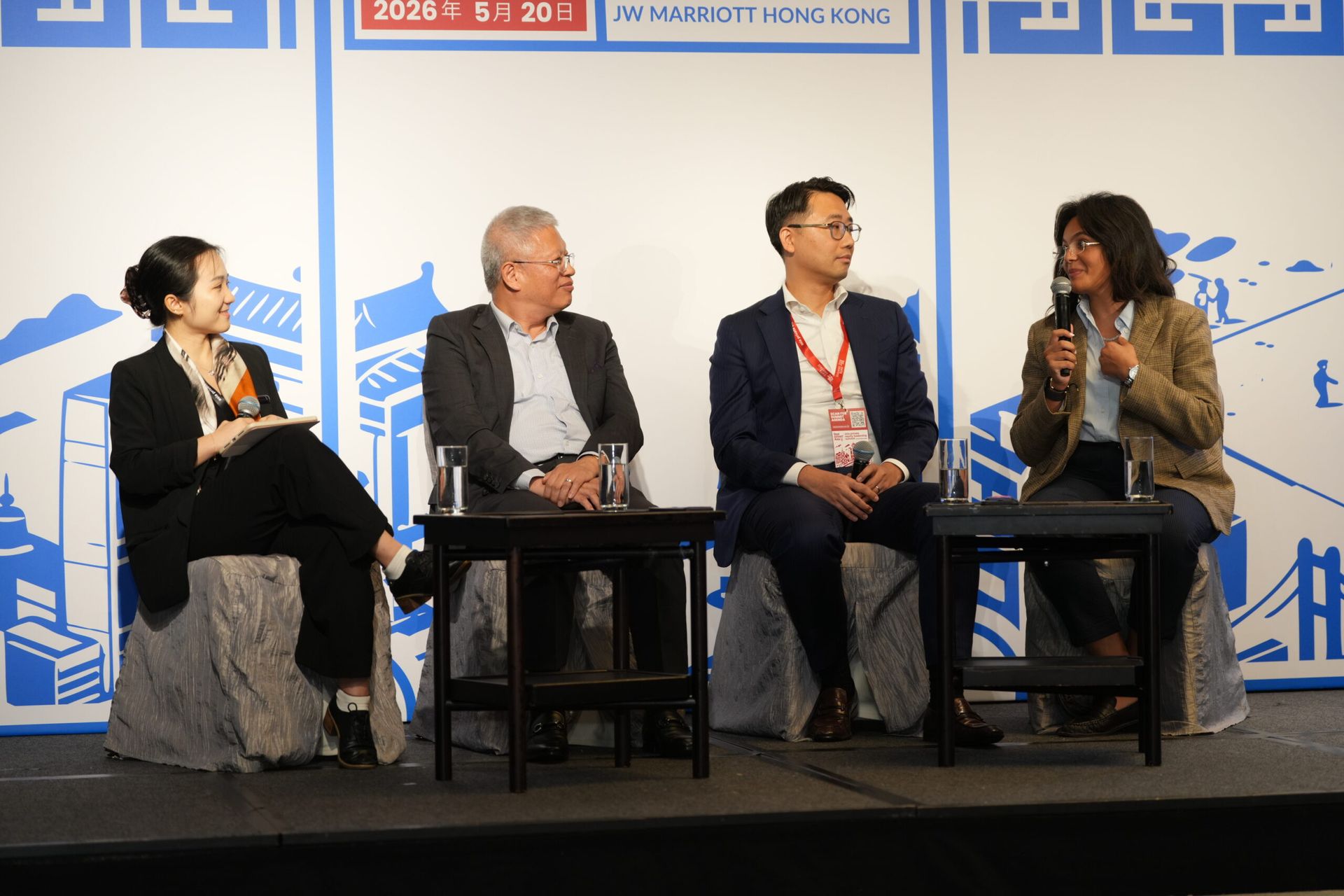
Investors with boots on the ground across the Middle East say business is moving forward even as headline risks mount.
Speaking at DealStreetAsia’s Asia Private Equity Leadership Summit in Hong Kong on Wednesday, three fund managers active across the Asia-Gulf corridor pushed back against the narrative that geopolitical turbulence is paralysing cross-border deal flow.
The discussion reflected a broader shift underway in the Asia-Gulf investment corridor, where investors increasingly see the relationship more as a long-term industrial partnership.
Cliff Chau, Managing Partner at ewpartners, whose firm helps Chinese companies expand into GCC markets, said the opportunity sits at the intersection of two structural trends: Gulf states attempting to diversify their economies beyond oil under Vision 2030 agendas, and Chinese companies searching for new overseas markets as competition intensifies at home.
“The two trends complement each other and become sort of our strategies,” Chau said, adding that ewpartners has completed around 20 investments across the region, many involving Chinese companies establishing operations, joint ventures, or technology transfer partnerships in the Gulf.
Cliff Zhang, chairman and CEO of Templewater, said Gulf governments are increasingly looking for operating partners capable of helping build domestic industries tied to energy transition, healthcare, advanced manufacturing, and logistics.
“We don’t see this as two separate pockets of capital, but we really see this as a corridor where Hong Kong helps on origination and institutionalising the overseas expansion plan, the Gulf ecosystem helps accelerate these overseas expansion development and adds strategic value to our portfolio companies,” Zhang said.
The panelists acknowledged geopolitical risk is real, but argued it is often overread by outsiders.
“It’s less about the headline, but it’s about the second-order effects, such as logistic disruptions and increasing compliance expectations from banks, insurers, and investors,” Zhang added.
At the same time, the panel pointed to a major shift in how Gulf sovereign wealth funds deploy capital.
Chow said GCC sovereign investors, which collectively manage trillions of dollars, are increasingly moving away from purely financial-return-driven investing toward mandates tied to domestic industrial development.
“PIF has been inward-focused for several years now,” Chau said, referring to Saudi Arabia’s Public Investment Fund. “They need to spend a lot of their capital reserve for the country to build the economy.”
That inward turn, investors argued, is creating clearer demand signals for foreign companies entering the region.
For Rasmal Ventures general partner Sumaya Dridje, the Gulf is also evolving beyond its reputation as simply a source of capital.
“A lot of investors, when they look at the Middle East, they think it’s a copy-paste ecosystem,” Dridje said. “But it’s changing a lot now. We’re having more and more innovations coming from the region that are brand new in sandboxes that no one is hearing about, and I’m sure a couple of years from now we’re going to hear things coming from this that would be impressive,” he added.
Dridje said Gulf investors are increasingly focused on building local capabilities in sectors such as food security, logistics, healthcare, and supply chain automation, while global talent is also returning to the region.
“We are not only looking outside as an opportunity,” she said. “We’re doubling down on our innovations, our people, and our funds.”