Grab did not take long to pull the trigger on its biggest cash acquisition to date.
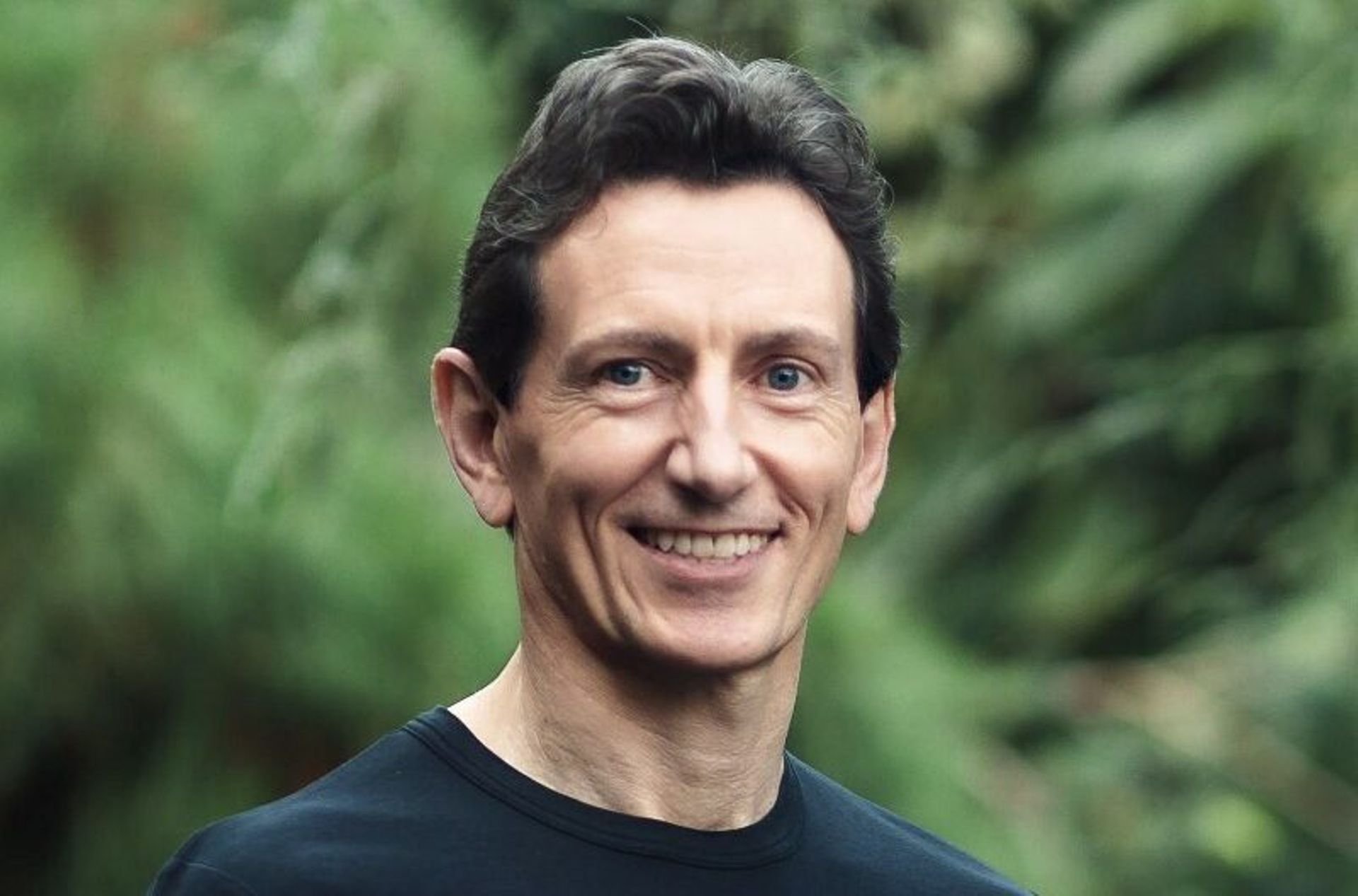
In a conversation with DealStreetAsia on Tuesday, Grab president and COO Alex Hungate told this publication that while the company had long been familiar with Atome Financial, negotiations for the $1.49-billion acquisition came together within months.
The deal caps an unusually active year of dealmaking for Grab. It agreed to buy Stash Financial in February, foodpanda Taiwan for $600 million in March, and moved to consolidate Indonesia’s Superbank in May, transactions that have expanded both its geographic reach and its financial-services footprint.
Atome is the biggest of those bets in cash terms, and arguably the most consequential for Grab’s lending ambitions. Grab’s own investor materials describe the transaction as giving it something that would otherwise take years to build: off-platform consumer credit at scale. On a pro-forma basis, adding Atome would increase Grab’s consumer cash-loan portfolio by more than 16 times and its BNPL and card portfolio by more than four times
Hungate pointed to the revenue upside as the deal’s strongest strategic case. “For me, this is the acquisition for Grab that has the best revenue synergies possible,” he said. “I can’t think of another company that could create this level of revenue synergy.”
“For me, this is the acquisition for Grab that has the best revenue synergies possible…I can’t think of another company that could create this level of revenue synergy.” — Alex Hungate
DealStreetAsia first reported in June that Grab was in talks to invest in Atome Financial. The deal announced this week now puts a structure around that pursuit: Grab will pay $1.49 billion in cash for an initial 60% controlling stake, and the remaining 40% will be acquired roughly two years after the first phase closes, under a performance-linked valuation framework. Atome Financial is wholly owned by Advance Intelligence Group.
Below are excerpts from DealStreetAsia’s conversation with Hungate, edited for length and clarity.
How did the deal start? Was it years in the making? How did Atome land on Grab’s radar?
They’re the market leader in digital lending in Southeast Asia, so we were very aware of them. As we started this journey into consumer finance ourselves, we were conscious of the fact that they had started that journey a decade earlier than us. It really was a unique combination that happened pretty fast, to be honest.
Once we started talking about the opportunity to grow together and lend to so many people in Southeast Asia who currently cannot find access to borrowing, or who have to go through predatory lenders, we became very sure this was a company that shared our mission.
From a financial perspective, the logic is very compelling. It’s hard to think of a combination that could create this much revenue synergy for Grab as this. We can save the 10 years they took to build up their credit models and all the relationships with the 30,000 retail brands they have built over time, and bring that capability immediately into our much bigger reach.
When you say the deal happened pretty quickly, when did serious discussions begin?
It all happened this year.
When we spoke in Jakarta in April, you were already talking about open-loop lending through BNPL. Does Atome accelerate that strategy?
Exactly. We were starting from scratch, so we would have had to build up all the credit models ourselves. That is one path, the organic path. But now we get to leapfrog all of that learning around the credit models and leapfrog the credit losses we would have had to take for the models to learn and get to a much bigger scale much earlier.
The product family of BNPL, instalments, personal lending and credit cards is a very important addition to our ecosystem, and Atome gives us that much sooner.
How big can lending eventually become within Grab?
Only about 1% of our 138 million annual transacting users have taken a loan from us. We think there is a huge opportunity to grow that to maybe something like 10%, so roughly 10 times growth. In the near term, when you combine Atome and Grab’s current lending book, we get to about $3 billion, and we expect to double that to more than $6 billion by 2028.
How do you see financial services fitting into Grab overall? Could it eventually become bigger than mobility or deliveries?
In terms of the contribution from financial services, we did give a breakout for 2028. We upgraded both our earnings and revenue-growth targets. On earnings, we raised our adjusted EBITDA target from $1.5 billion to $1.7 billion, and said that $500 million of that would come from financial services.
So by 2028, financial services will already be a very important contributor alongside mobility and deliveries. That gives us greater diversification of profit and cash generation across the ecosystem. We also expect financial services to be an important driver of faster revenue growth. Previously, we had guided to a three-year revenue CAGR of 20% through 2028; we’ve now raised that to more than 30%.
So, to answer your question directly, financial services will make a very material contribution to Grab overall.
Just to confirm, this is Grab’s largest cash acquisition to date, right?
That’s correct. The largest acquisition before this was the Uber acquisition, but that was a stock transaction.
For me, this is the acquisition for Grab that has the best revenue synergies possible. I can’t think of another company that could create this level of revenue synergy. That sequence works better because you establish the historical significance first, then let him explain why he thinks the deal stands out.
Why buy 60% first and then agree upfront to acquire the remaining 40% later?
We really like this structure because we get control immediately and we are able to consolidate. At the same time, the remaining 40% is a good way of making sure we get performance. When we take the other 40%, the price is based on a formula using earnings and revenue. So it is a good incentive for the Atome team to remain focused on delivering performance, and it means our shareholders know we are paying for performance.
With Stash, Superbank and now Atome, should investors expect more acquisitions in financial services?
We have a very high bar for M&A. Our main source of growth is organic, and we are very pleased with the organic growth opportunities ahead of us. We only make inorganic transactions where there is some unique asset where we know we can add a lot of value. In the case of Atome, it is a very unique asset where the revenue synergies are so compelling that it definitely cleared those high hurdles.
Fintech comes to the forefront
The Atome deal also underscores how financial services are becoming an increasingly important part of Southeast Asia’s superapp model.
GoTo offers perhaps the clearest example. In the second quarter, its fintech arm generated Rp481 billion ($29 million) in adjusted EBITDA, surpassing the Rp464 billion from its on-demand services business for the first time.
Grab’s numbers also point to the growing weight of financial services within its own business as the segment is seen to contribute $500 million of its $1.7-billion adjusted EBITDA target in 2028.
For superapps, financial services can look like a natural evolution of the businesses they already operate. Mobility and delivery platforms have spent years building transaction histories, payment data and behavioural signals that can also inform credit decisions.
Hungate pointed to that advantage during Grab’s investor briefing on the Atome transaction. Grab processes 300 petabytes of data a day, while its ecosystem spans more than 50 million participants across over 900 cities and has recorded more than 20 billion transactions since 2012. The company is increasingly using that data to inform underwriting decisions.
Expansion to credit, however, comes with a different risk profile. While Grab’s gross loan portfolio nearly tripled year on year to $2.32 billion in the second quarter of 2026, its net impairment losses on financial assets more than doubled to $72 million from $33 million. The company said the increase was driven mainly by higher expected credit losses at its digital banks.
The initial market reaction suggests investors are weighing those risks against the promised upside. Grab shares fell 3.64% on Wednesday to $2.91 apiece, their lowest level this year.