US-based infrastructure manager I Squared Capital sees broader exit opportunities in Asia Pacific (APAC), particularly for the platform model, according to a top executive of the firm.
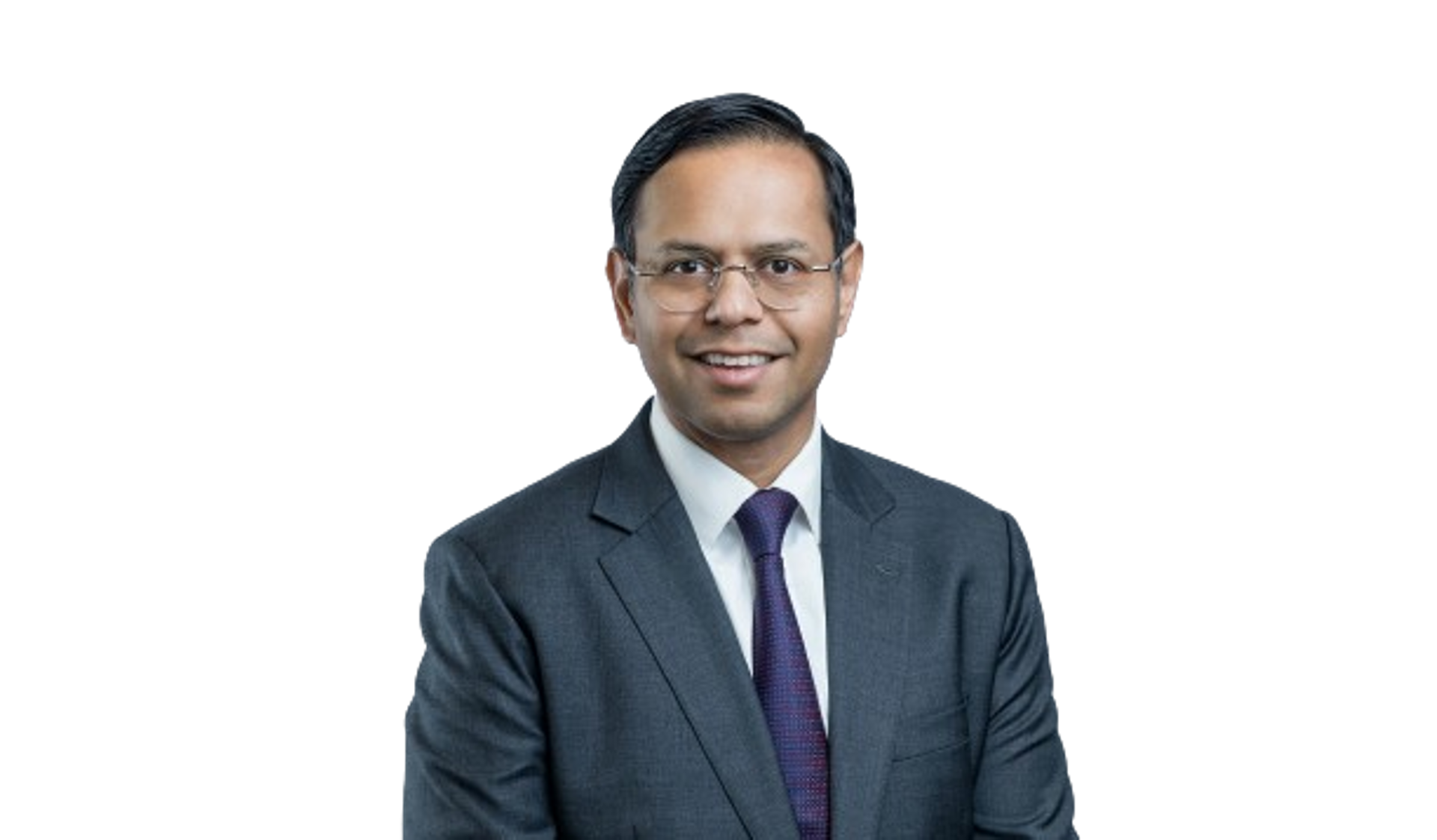
“We have pursued both platform investments and opportunistic buyouts, and we continue to do both. But the platform-oriented strategy is particularly well suited to Asia, where there is still significant scope for consolidation and for building industry champions,” said Harsh Agrawal, Senior Partner, Asia, at I Squared Capital.
I Squared Capital recently acquired logistics and cold storage platform Cella in Indonesia, a year after it acquired Royal Cold Storage in the Philippines. It has also partnered with the US International Development Finance Corporation (DFC) on a $3-billion investment platform focused on developing critical energy infrastructure in South and Southeast Asia.
According to the Asian Development Bank, developing Asia would need $26 trillion of infrastructure investment between 2016 and 2030, with power accounting for the largest share at $14.7 trillion, followed by transport at $8.4 trillion and telecommunications at $2.3 trillion.
The scale of this demand is creating opportunities not only to build new assets, but also to consolidate fragmented markets and develop businesses large enough to attract a broader pool of capital.
As more capital enters Asia, it is also increasing the liquidity profile of investments made in the region. “Particularly for platform investments, if you execute them well, I think there can be a much bigger payoff on exit than in the past because there are more investors looking to acquire assets in the region,” Agrawal said.
Local capital markets have also become more advanced, expanding the range of potential exit routes for infrastructure investors. “As we have seen over the years, returns have been quite attractive,” he added.
Identifying opportunities
APAC offers a diversified opportunity set in the infrastructure space, thanks to the different underlying structural trends across the region.
“In developing Asia, there is significant urbanisation and a growing middle class. That creates a set of investment themes that are quite different from those in developed Asia, where we are seeing a more rapid move towards energy transition, growth in digital infrastructure and increasingly stringent government standards around environmental infrastructure,” Agrawal elaborated his view.
For investors, the opportunity is also evolving beyond simply meeting demand. As markets mature, infrastructure businesses are increasingly being developed around scalable commercial models.
“Demand for infrastructure development creates a lot of innovation in the space,” he said, pointing to I Squared’s investment in Lightstorm, a business that interconnects data centres, as an example of how new infrastructure models are emerging alongside changing demand.
The model which, according to Agrawal, has emerged over the last few years involves deploying fibre-optic networks to interconnect data centres into the digital grid.
I Squared Capital has identified certain areas within infrastructure that need significant future investments and will yield strong returns for investors who capture the opportunities early.
One of them is power and grid, which is critical to digital transition.
Another area receiving increasing attention is industrial infrastructure, which involves investing behind the infrastructure needs of large industrial and corporate customers. “That is where we are starting to see a lot more investment,” Agrawal said.
Environmental infrastructure is the third area of focus. This includes services such as industrial waste treatment, where rising industrial activity is coinciding with tighter environmental regulation.
As industries and economies expand, companies need more specialised infrastructure to manage the waste they generate, creating opportunities for investors to build businesses around these increasingly essential services.
I Squared manages more than $60 billion in assets and has deployed $9.1 billion in APAC. Investments in this region are currently made through its Growth Markets Fund II, which targets a net IRR of 15-17%.
In the Philippines, I Squared has committed more than $2 billion across transport and logistics, digital infrastructure and power.
In Australia, I Squared established its Sydney office in 2022 and has since committed more than $1.5 billion of capital.
Leveraging partnerships
Agrawal said partnerships with strategic stakeholders can be particularly valuable when investing in targeted infrastructure themes across the region.
I Squared has, for example, maintained a longstanding partnership with the Japan Overseas Infrastructure Investment Corporation for Transport & Urban Development, through which it has brought Japanese strategic and industrial investors into and alongside its investments.
“Japan is one of the most advanced and industrialised countries in Asia. As we invest in some of the developing Asian markets, having the benefit of those learnings, best practices and technology is extremely helpful,” Agrawal noted.
The firm’s partnership with DFC is similarly designed to leverage complementary capabilities. The two organisations have previously worked together on broader Asian investments as well as climate-focused investments, while their latest platform is focused specifically on energy infrastructure in South and Southeast Asia.
“With the conflicts going on around the world today, energy security has become a major imperative for many governments. We need more investment in energy infrastructure to support energy security, such as the infrastructure to regasify LNG and distribute it,” Agrawal said.
The partnership allows I Squared to leverage DFC’s relationships with governments across the region, as well as its network of global strategic partners, to bring the best of that expertise and network into Asia as the firm develops energy infrastructure in the region.
Asked about the long duration of infrastructure investments, and the impact-oriented nature of certain assets, Agrawal noted the firm’s investment approach remains grounded in commercial considerations. “When we look at investments, we are always assessing them from an impact and sustainability perspective, but also very importantly, from a commercial viability perspective.”
Power, grids or environmental infrastructure, which are the firm’s focus areas, are all commercially viable sectors with proven, attractive business models, according to him.
“That is obviously a key part of our underwriting.”