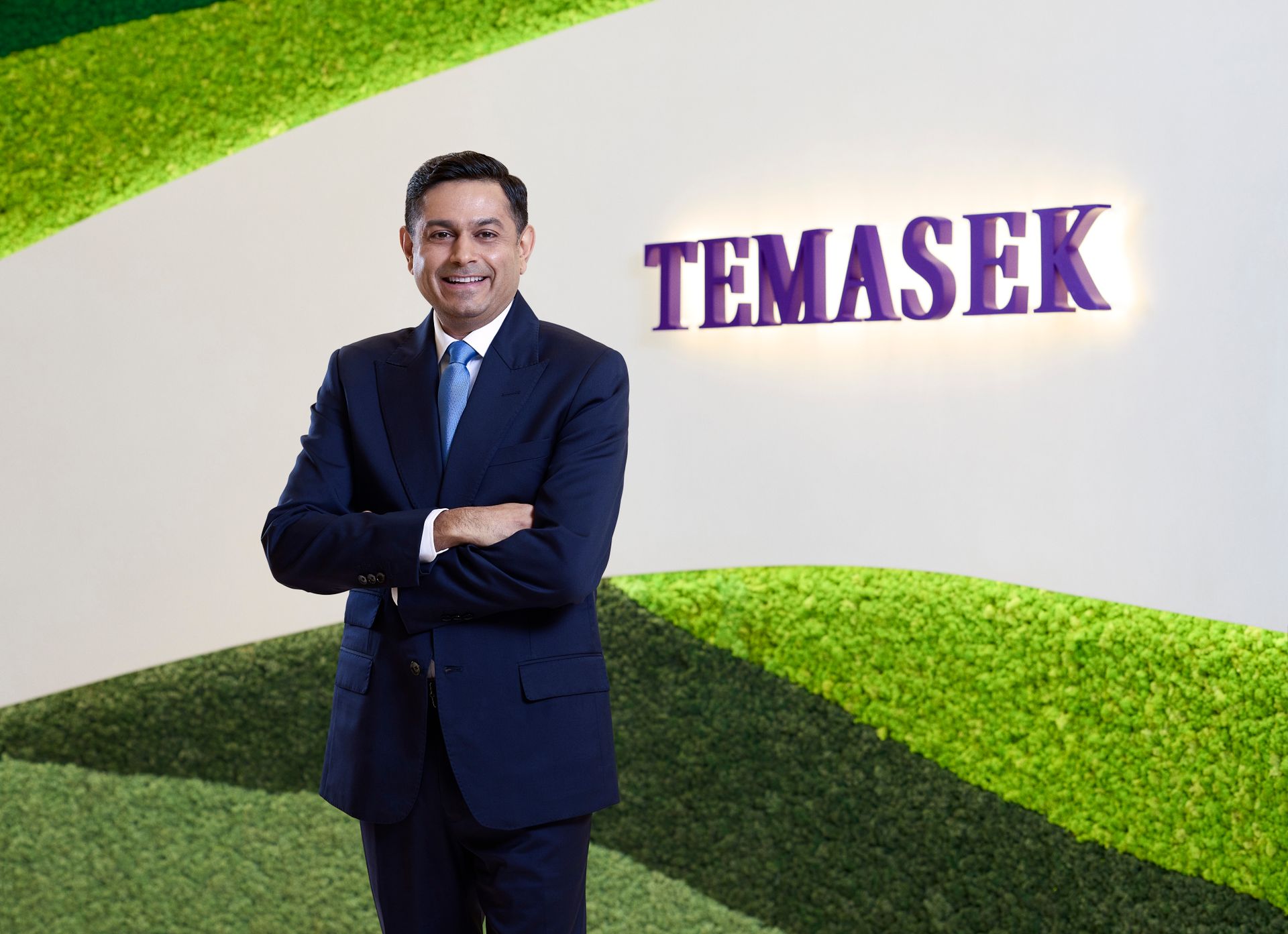
Singapore state investor Temasek is expanding its secondary capabilities as part of a broader capital-solutions offering, as surging demand draws more capital and specialised strategies into the secondary market.
The state investor is building a roster of global general partners focused on single-asset continuation vehicles (SACV), and using its wider platform to participate in transactions and provide capital, said Alpin Mehta, Head of Private Equity Capital Solutions and Real Estate at Temasek.
“We’ve been adding more GPs to our portfolio who focus specifically on SACV strategies—a lot of GPs in the industry have either moved into secondaries from primary, or started dedicated SACV strategies within secondaries; we may seed select strategies to deepen strategic GP relationships which would potentially create opportunities for Temasek to participate alongside those managers,” he explained.
According to the Jefferies 2025 Global Secondary Market Review, single-asset CVs targeting ‘trophy’ assets continued to gain popularity, exceeding 50% of total CV volume for the first time in 2025.
The US has seen the lion’s share of secondary activity, given the depth of its private equity industry and its more advanced secondary market, with significantly greater capital formation than in Asia.
“Secondaries for us is a newer area and forms part of our broader capital-solutions offering rather than a standalone strategy. We naturally started with the US, the biggest part of the overall market, and that is evolving,” Alpin told DealStreetAsia in an exclusive interaction.
Activity remains limited in Asia, where fewer players operate in the space. Temasek is nevertheless open to opportunities in the Asian CV market, alongside those in the US and Europe.
Underwriting secondaries
Temasek can participate in secondaries both as an LP in specialist funds and as a co-investor or co-underwriter in selected continuation vehicle transactions, explained the executive.
The investor first looks for GPs with a strong track record and governance that it can underwrite as having “a right to win” in the GP space. “As we see more deal flow from them, we will co-underwrite deals with them. We will bring in our direct team, which is our Temasek Global Investments (TGI) team, to also invest in some of those deals as a direct investor,” stated Alpin.
TGI is one of Temasek’s three wholly owned portfolio-management entities and focuses on global direct investments.
This could become more relevant as transaction volumes increase, given that SACV funds are significantly smaller than primary funds—“so that lets us continue to co-invest and co-underwrite deals alongside our GPs that meet our value test. That’s how we’ll grow our secondary business from the fund side, going forward,” the executive pointed out.
This approach sits alongside Temasek’s focus on the underlying asset in a continuation vehicle.
The investor does not assess a CV based on the discount alone.
“Discounts are not a good barometer when evaluating CVs because each time it is a matter of weighing discount versus quality.”
It focuses on high-quality assets where part of the value-creation plan has already played out and where it has high conviction in future value creation.
Alpin said Temasek’s underwriting has always been fundamentals-based and that the firm has always been very stringent in how it looks at and underwrites a CV, and why it would invest in one. “As more transactions happen and we gain more exposure and learnings from the industry and our own portfolio, we factor those learnings back into our evaluation process.”
For Temasek, secondaries are no different from primary transactions and remains opportunity-led, rather than driven by a hard allocation model. The firm is doing more secondaries today than three years ago and would do more if the opportunity becomes more attractive.
Asia’s secondary market
“Opportunities in Asia and the US are shaped by different levels of capital formation, which has contributed to the greater concentration of secondary-market activity in the US. As capital formation develops, other markets are expected to follow,” stressed Mehta.
Still, Temasek remains constructive on Asia’s growth story.
To some extent, the investor has an advantage being based in the region—having a sizeable investment portfolio here, and the strong footprint of its Temasek Portfolio Companies (TPCs) anchored in Asia giving it deeper connectivity and a strong understanding of the market.
“We look at all markets bottoms-up—where we find the best opportunity, we focus capital. We’re well focused on India, China, Japan, Australia, Southeast Asia, and Korea; as we see opportunities, we lean in to invest in funds, do recaps, co-investments, co-underwrites,” Alpin noted.
He expects more continuation vehicles and capital formation to emerge in Asia as the industry and economies evolve.
However, the development of Asia’s secondary market is unlikely to be uniform, with IPO availability and broader market conditions shaping the trajectory of individual markets.
India, for example, has liquid public markets that remain open as an exit route, allowing companies to tap public markets for a longer runway to continue value creation.
In that context, for a primary GP, the choice between a public-market exit and a CV comes down to which option can maximise value for investors. A CV becomes more interesting where staying private could allow a company to grow faster and generate more value than going public, or where the company is not yet ready for the public markets.
“Public markets don’t trade everything at the same multiple, they trade in a wide range, and if a company would sit at the lower end of that range, it’s worth looking at other options,” the executive explained.
Capital formation is currently smaller in Asia than in the US, which he said “affects the opportunities that become attractive based on the amount of capital available”. Macroeconomic and geopolitical dynamics can also influence how investors approach individual markets.
“We’ve seen this on the primary side too—each market has its own nuance that shapes how the opportunity evolves,” he said.
Broader geographical approach
“We are a global investor—we invest across the US, Europe, Asia, and are starting in the Middle East,” Mehta said.
Most of the GPs Temasek invests in have similar businesses both in the sectors and markets they cover. Its relationships with GPs are global, with the firm applying similar approaches to co-investments, co-underwrites, and secondary solutions across markets. It co-invests alongside GPs in India, Japan, Korea, Australia, China, and Southeast Asia.
“The Middle East is a newer investment focus, although Temasek has had a longer regional presence through its portfolio companies (including PSA International Pte Ltd, Surbana Jurong, a global urban, infrastructure and managed services consulting firm; and CapitaLand in real estate). As our GPs also build their presence there, we’ll invest alongside them. We have already made a number of investments through GP-managed funds and partnerships focused on Middle-East opportunities; we’ll look for opportunities to deploy more capital.”
The investor expects opportunities to come from both its portfolio companies expanding into the region and other GP partners building their businesses there.
Capital solutions
The base of the business for the state investor remains investing in funds as an LP, which initiates the relationship with GPs.
Beyond that, Temasek focuses on co-creating opportunities with GPs through pre-signing and post-signing syndication, as well as large co-underwrites involving TGI.
TGI brings in the sector and market expertise which helps add value to the GPs. Temasek, working alongside TGI, evaluates the deals and also has governance rights in a number of those deals and co-invests alongside its GPs.
“This can enable the GP to do larger deals,” Alpin said.
Temasek’s TPC platform also has portfolio companies that can potentially work with its GPs and their portfolio companies.
Alpin said the objective of Temasek Partnership Solutions (TPS) is to grow Temasek’s alternatives portfolio, including private equity and private credit, while creating synergies with TGI. The structure is intended to create greater focus, build capabilities, and improve capital allocation across the business.
Temasek also extends its relationships with GPs through secondary solutions, including recaps or partial recaps of existing investments, where it provides liquidity for part of an investment while continuing to participate in the value creation.
Credit and hybrid solutions form another part of the capital-solutions business. Its credit and hybrid solutions platform—Aranda Principal Strategies (APS)—works alongside GPs to provide credit solutions for acquisitions, liquidity solutions when portfolio companies undertake M&As, and hybrid solutions where required by GPs or their portfolio companies.
Its asset management companies provide another avenue for working with GPs. These businesses allow Temasek to build strategic partnerships with GPs, create new products, and syndicate and securitise its portfolio of fund investments through products including Astrea by Azalea and other co-investment products, creating synergies with Seviora.
Seviora provides another area of collaboration, with GPs able to work with the asset manager to create products. An example is the recently closed $400-million collateralised fund obligation by Seviora Holdings and Nuveen’s Churchill Asset Management, which was oversubscribed and split equally between Asian and US private capital strategies.
“That’s the synergistic role we play as a OneTemasek team, and we help facilitate a lot of these relationships,” concluded Alpin.