Navigating growth and complexity in Southeast Asia’s healthcare sector

Navigating growth and complexity in Southeast Asia’s healthcare sector

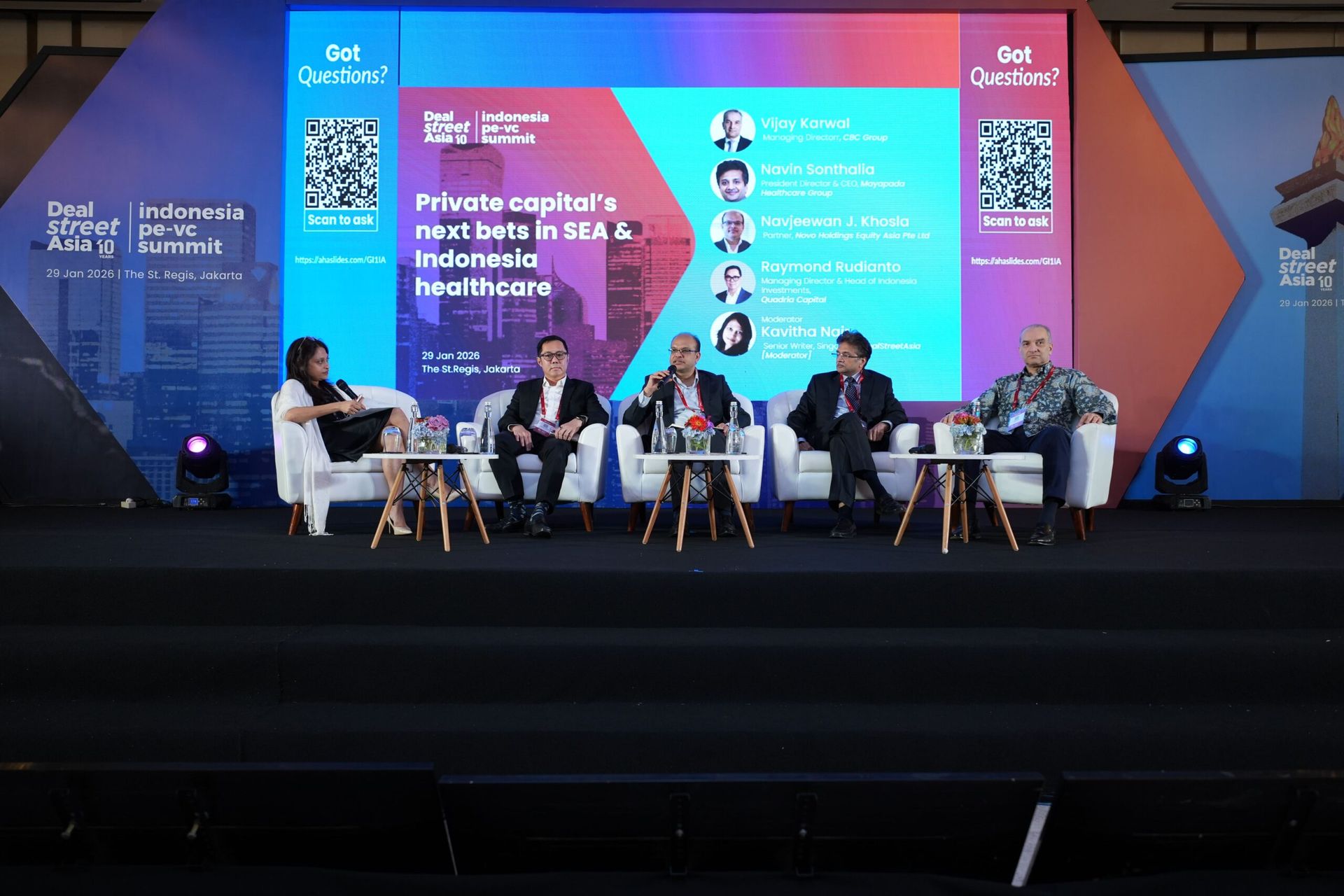
From L to R: Raymond Rudianto, Managing Director and Head of Indonesia Investments at Quadria Capital; Navjeewan Khosla, Partner at Novo Holdings; Navin Sonthalia, President Director & CEO of Mayapada Healthcare Group; Vijay Karwal, Managing Director at CBC Group

Southeast Asia is on the verge of increased healthcare activity, with hospital consolidations underway and deal pipelines expanding in Indonesia and Vietnam, according to industry experts at DealStreetAsia’s Indonesia PE-VC Summit 2026.

However, investment opportunities across Asia differ significantly by country. In China, for example, many hospital assets are publicly owned, and the regulatory framework for healthcare investment is complex and unpredictable. Initiatives such as value-based pricing have disrupted many investment models, increasing risk for investors.

In India, the market remains attractive but selective. Valuations are generally high, and after several years of intense healthcare activity, few high-quality assets are available. Investment strategies typically require either moving up the valuation curve or down the quality curve, both of which carry challenges. In contrast, Southeast Asia is approaching a period of strong activity. 

“Speciality care, including high-theatre procedures and dialysis, is set to grow alongside eye care, fertility services, and day-care surgery centres. Private equity focus is on Southeast Asia, India, and China,” said Navjeewan Khosla, Partner at Novo Holdings.

Vijay Karwal, Managing Director at CBC Group, highlighted two key themes. 

First, the emergence of advanced technology and innovation as sources of growth in global and emerging markets. In China, high-quality scientific research in life sciences is producing new therapies that address disease and patient needs worldwide. Innovation is also emerging from India and select companies in Indonesia, particularly in medical technology and devices, delivering high-quality products at competitive price points. Karwal said these innovations can play a key role in meeting the growing demand for healthcare products driven by increasing treatment volumes.

Second, the diversity in Southeast Asia, a region that comprises ten countries, each with distinct regulators, payment systems, and varying levels of affordability and income. Many global manufacturers struggle to commercialise effectively across these markets. In response, CBC has begun investing in commercialisation platforms, emphasising demand generation focused on physicians, clinicians, and patients rather than distribution.

In Indonesia, the healthcare industry is largely built out, with scale bringing benefits to the workforce, margins, operational efficiency, and payer and specialist positioning, observed Navin Sonthalia, President Director & CEO of Mayapada Healthcare Group. 

Sonthalia noted that historically, there has been a shortage of specialists, which has shaped services, products, and capacity around them. “Over the past four years, under government leadership, regulatory changes have contributed to an increase in specialists entering the system. The ministry is permitting foreign doctors to practise in designated zones and is developing a framework to allow foreign doctors in selected hospitals,” he said.

Quadria Capital considers governance as more important than case mix or payer structure, driven by a strong cost-management culture. From the outset, new hospitals are designed to operate as low-cost providers.

“Centralised procurement reduces the cost of drugs, consumables, and other inputs, keeping expenses low. Operating leverage comes partly from scale, but more importantly, through governance and effective systems, enabling healthy margins,” said Raymond Rudianto, Managing Director and Head of Indonesia Investments at Quadria Capital.

The firm recently upgraded the IT system at Hermina, in which Quadria Capital Fund II acquired a minority stake. Hermina operates over 50 hospitals and serves nearly 10 million patients annually.

Healthcare services and hospitals in Southeast Asia are complex due to differing regulations, country environments, and payer markets. While the region can be viewed collectively, patient profiles, budgets, and regulations vary materially at the country level. Digital platforms can help transcend borders, but the main gap in the region lies in digital services, an area identified by Novo Holdings as a focus.

Bring stories like this into your inbox every day.

Sign up for our newsletter - The Daily Brief
Subscribe to Newsletter


This is your last free story for the month. Register to continue reading our content