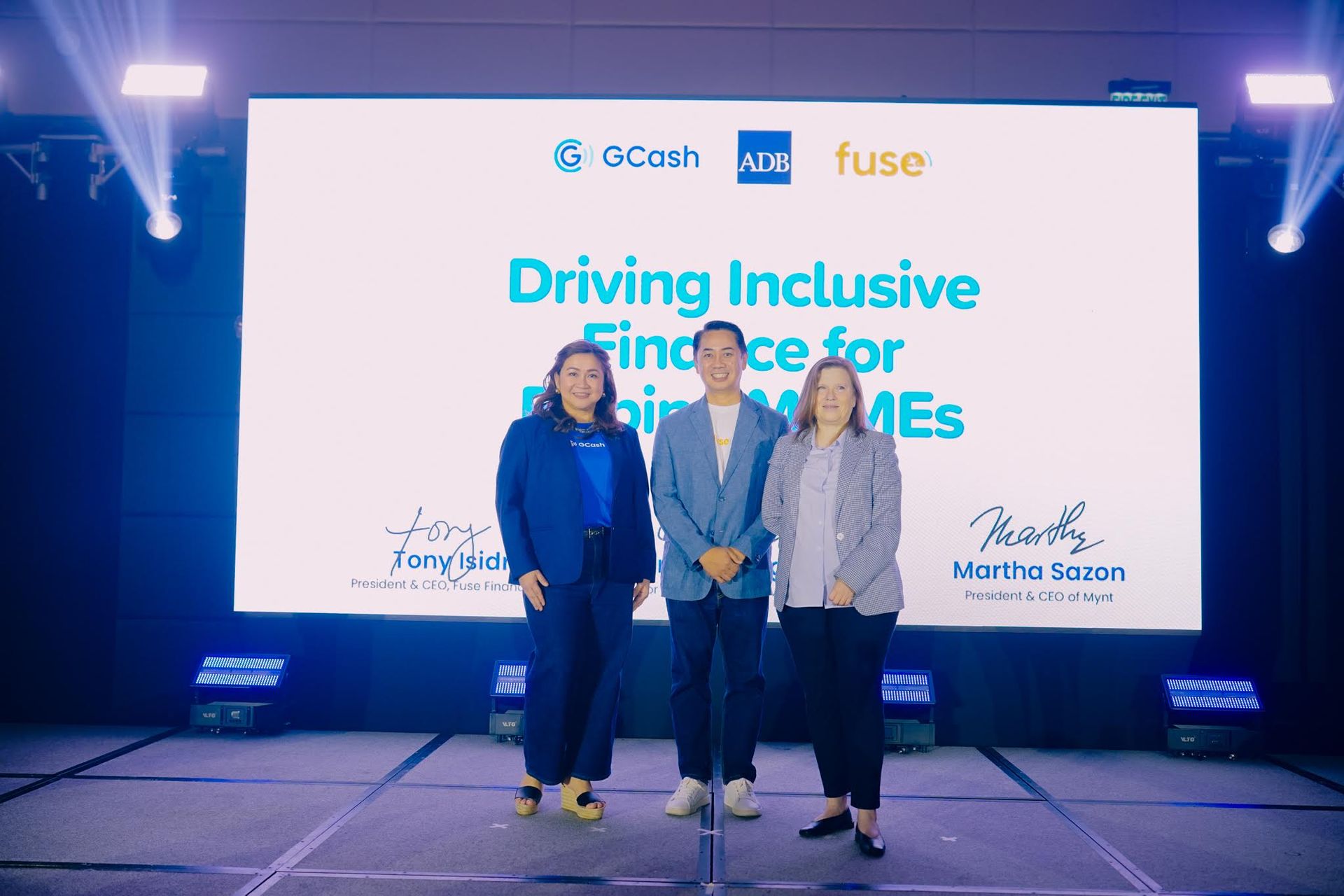
The Asian Development Bank (ADB) has made its first-ever fintech partnership in Southeast Asia, committing a 1.75 billion pesos ($30 million) credit facility to Fuse Financing, the lending arm of GCash, in a move that signals a shift in how the multilateral lender is deploying capital to reach micro, small, and medium-sized (MSME) enterprises.
The facility, formally signed on Thursday, will be used to expand lending to MSMEs across the Philippines, with a specific focus on women-led businesses and enterprises in rural and high-poverty areas.
The financing is complemented by catalytic funding from Mastercard, while ADB will also provide up to $125,000 in technical assistance for product development and financial and digital literacy programmes.
ADB officials said the partnership marks the first time the institution has directly backed a fintech platform for MSME lending in the ASEAN region.
In the Philippines, MSMEs account for around 40% of the gross domestic product (GDP) and 63% of total employment. According to the Department of Trade and Industry (DTI), there are 1.24 million registered business establishments as of 2024, over 99% of which are micro, small, and medium enterprises.
The fintech bar
Asked why this is the first time ADB is providing a credit facility through a fintech, Christine Engstrom, ADB’s Director General for Sectors Department 3, told DealStreetAsia that the bank needed to review the partner’s financials, verify proof points, assess technology and the regulatory environment, and ensure the platform could sustainably reach its target audience.
The decision to partner with GCash did not come from a single pitch or event, Engstrom said, but from rigorous engagement and due diligence.
The ADB official told DealStreetAsia that it has been assessing multiple fintechs across Southeast Asia, prioritising platforms that demonstrate profitability, scale, and regulatory clarity
“For us, outreach is critical, but so is profitability,” Engstrom said. “If the business is not commercially sustainable, it cannot continue to reach underserved communities over the long term.”
The Philippines also offered a relatively mature digital payments market and a regulatory environment that ADB views as supportive of digital finance, making it a suitable test case for replication elsewhere in ASEAN.
ADB officials were explicit with the GCash deal as a first-of-its-kind partnership, with the potential to inform similar fintech-led MSME lending initiatives across Southeast Asia.
Engstrom told this publication that the bank will track metrics such as outreach to women entrepreneurs and rural businesses, alongside portfolio performance and commercial viability, potentially paving the way for similar fintech partnerships elsewhere in Southeast Asia.
“We hope this will not be the last,” Engstrom said, adding that ADB continues to evaluate other fintechs in the region.
GCash’s MSME play
For Fuse, the lending arm of GCash, the partnership comes as lending to smaller enterprises becomes a more important growth lever.
Fuse CEO Tony Isidro said the company intends to scale its MSME lending operations this year as a significant revenue lever for the company.
“Lending to MSMEs is something we’re looking at quite intensely as a source of growth,” Isidro told DealStreetAsia. “With this partnership, we see a clear opportunity to scale that further.”
He added that ADB’s involvement went beyond funding, citing the development bank’s “very rigorous” due diligence process and its role in defining success metrics tied to specific borrower segments.
“This isn’t a generic lending push,” Isidro said. “We’re very clear on the target: MSMEs led by women and those operating in the provinces, particularly in high-poverty areas.”
In a conversation with DealStreetAsia at GCash’s HQ in Taguig City in August 2025, Isidro said they have 287 billion pesos in loans disbursed since the company’s inception, serving 9.5 million unique borrowers.
He also said that for most of the company’s customers, credit with GCash marks their first experience with formal loans with around 90% of them had previously relied on informal lending.
The deal also fits into ADB’s wider push to deploy capital into inclusive economic expansion.
For fintechs across Southeast Asia, the message is clear: development capital is opening up, but only to platforms that can demonstrate both impact and durability.
For now, GCash’s Fuse is the first to clear that bar.