Partner content in association with
Investors urged to ‘embrace messiness’ and aid governance in Southeast Asia

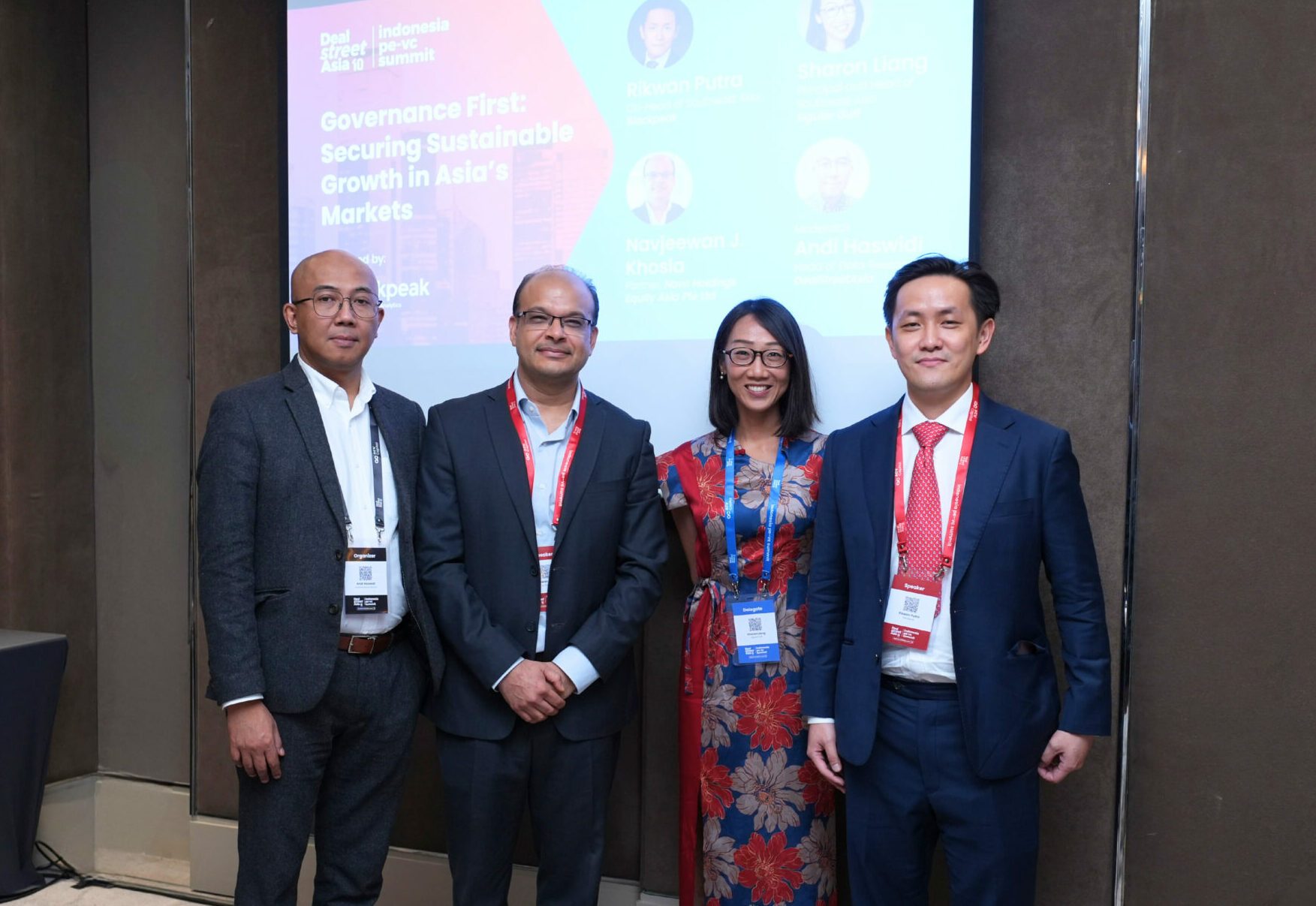
Left to right: Andi Haswidi, Head of Data Research, DealStreetAsia [Moderator]; Sharon Liang, Principal and Head of Southeast Asia, Siguler Guff; Rikwan Putra, Co-Head of Southeast Asia, Blackpeak.
As Indonesia grapples with yet another high-profile governance controversy, investors must “embrace the messiness” of the market and help shape stronger governance standards, according to panellists at DealStreetAsia’s Indonesia PE-VC Summit 2026 held in Jakarta on Jan 29.
Indonesian stocks came under pressure in January after Morgan Stanley Capital International (MSCI), the world’s most widely followed index provider, raised concerns over the investability of Indonesian securities, citing issues including transparency in shareholding structures and the reliability of free-float data used in its benchmarks.
In 2025, Indonesia’s startup ecosystem grabbed global attention for all the wrong reasons, after investigations and forensic audit led by investors found that aquaculture company eFishery had inflated its revenue fivefold over a nine-month period. This was followed by an alleged $25-million corruption and money-laundering scandal involving investment funds at agriculture startup TaniHub.
Commenting on governance issues in Indonesia and similar cases globally, Sharon Liang, Principal and Head of Southeast Asia at private equity firm Siguler Guff, said while such incidents are “unfortunate,” they are relatively common in emerging markets, and investors should manage their expectations accordingly.

The sentiment was echoed by a fellow panellist and investor who said Southeast Asia is riddled with businesses with undisclosed control as well as family-owned ecosystems, leading to complicated governance problems that can be troublesome for investors.
While regulators and industry players are taking steps to address these issues, learnings from markets like India show that significant improvements could take up to a decade to materialise.
“So either you wait for 10 years and look for an ideal company, or you price in the risk now of whatever you can improve or whatever you can change,” the investor said.
Invest and engage
Investors, in fact, have a notable role to play in shaping good governance in businesses across the markets rather than passively waiting in the sidelines for things to improve, the panel agreed.
There are established governance playbooks that investors can implement to improve oversight and accountability. These include strengthening board quality by appointing genuinely independent directors with relevant industry expertise and networks, as well as putting in place clear escalation and grievance procedures.
Such frameworks allow issues to be raised directly to the board, including through formal whistleblowing channels, the investor quoted above said, noting that these are actively reviewed under set processes.
“Even if 200 or 300 whistleblowers send me an email, I will look at it and start an independent procedure,” he said. “So as board members, also as investors, it becomes our duty to enhance corporate governance as well.”
However, he cautioned that not all companies facing governance issues are worth engaging with.
While some problems may be addressable—particularly those stemming from specific individuals or management practices—others are deeply embedded in a company’s DNA and far more difficult to fix. In such cases, the investor said, it is better to walk away, as deeply rooted cultural issues—particularly those linked to founders—are extremely difficult to change.
In order to identify the root cause of the problem, investors need to conduct multi-layered due diligence before committing to any deal. This may include talking to current and former employees, as well as competitors.
“We have to build multiple layers of different contact points. If we only know the CEO and his wife, we are doomed!,” says Siguler Guff’s Liang.
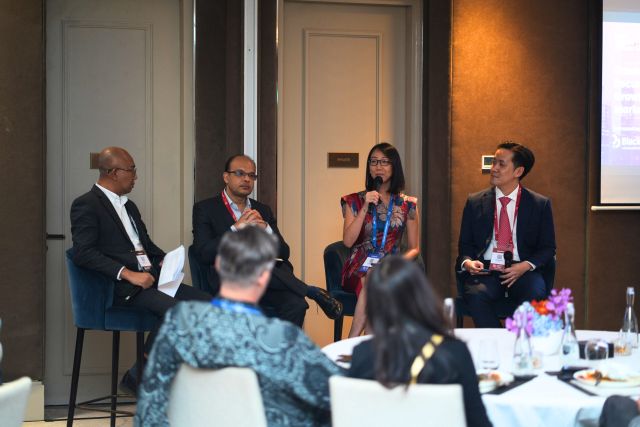
Enhanced due diligence
Investors’ heightened concerns over governance issues have strengthened the demand for trusted independent, third-party due diligence service providers to uncover and navigate governance and reputational risks.
Blackpeak, a leading investigative due diligence specialist, confirms that there has been an uptick in demand for their services, which has led to a range of cases being uncovered related to fraud, undisclosed connections, hidden ownership, bribery, and facilitation payments—practices known to be prevalent in business activities in Southeast Asia.
According to Blackpeak’s co-head of Southeast Asia, Rikwan Putra, increased sensitivity around governance issues is not necessarily due to the increase in the number of such cases but due to greater visibility and faster public reactions to such issues.
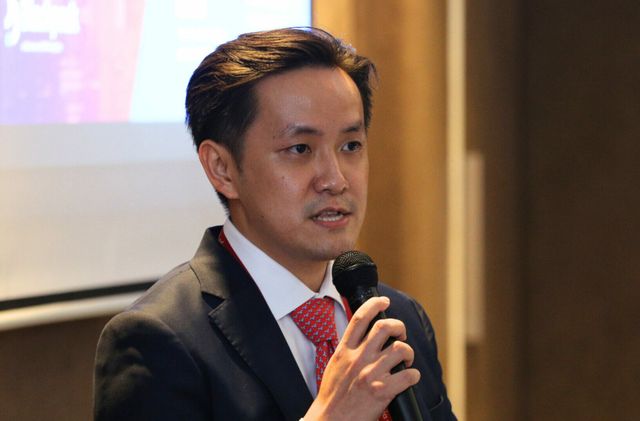
“In the past, governance issues could remain well hidden in a company, but now, NGOs can take a closer look, journalists are picking up stories, and even individuals can make something viral on social media… companies have less time to react to them, and the issues can bring significant reputational damage,” he said.
The focus on governance among investors was reflected in a 2024 Global Investor Survey report by PwC, which found that investors see corporate governance matters, including risk management, controls, and ethics, as the most important aspect when evaluating companies for investments—more important than factors like innovation, management competence, and human capital management.
This heightened caution around governance comes amid a broader slowdown in dealmaking across Southeast Asia. According to DealStreetAsia’s Southeast Asia Startup Funding Report: Full Year 2025, the region’s total deal volume in 2025 stood at 461—one of the lowest recorded in more than six years.
Putra underscored that his firm’s role is to identify and evidence potential risks so investors can determine whether–and under what safeguards–to proceed. “Our aim is to highlight how governance‑related risks may materialise post-investment. With that visibility, clients can mitigate them by negotiating on the terms or putting in place some controls,” he said.