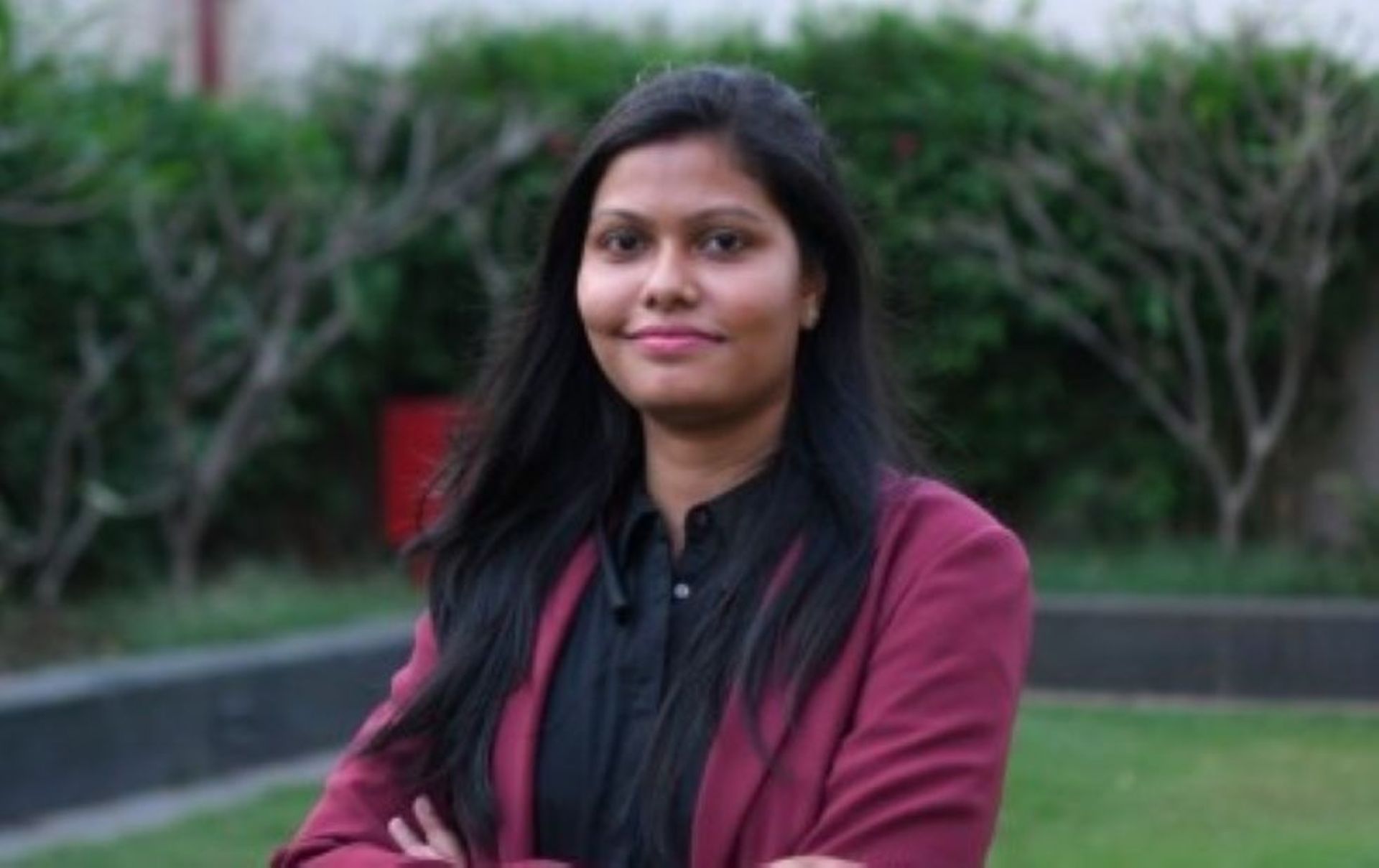
As the conversation around funding for women-led startups becomes more action-oriented, expanding the pipeline of women building in deep tech, infrastructure, and AI will be critical to enabling more companies to scale and secure capital at meaningful levels, says Akanksha Priyadarshini, founder & CEO, Aurassure.
“On the personal front, being a woman founder in predominantly technical and infrastructure-focused rooms did shape perceptions at times, often requiring deeper preparation and stronger demonstrations of conviction and technical understanding. However, in a tighter funding environment, what ultimately matters most is whether founders demonstrate the technical depth, operational discipline, and commercial clarity needed to build and scale a strong business,” said Priyadarshini in an interview for DealStreetAsia’s recent report titled Women Founders in India: Funding Review 2025.
According to her, there has been a visible shift in both participation and perception over the past five years. More women are building in sectors like climate tech, deep tech, and infrastructure, and that visibility helps normalise women leading technically strong, venture-backed businesses. Access to networks has also improved, with stronger peer communities and a greater willingness among investors and accelerators to engage with diverse founding teams.
Edited excerpts:-
What sparked your decision to start this venture, and how did you identify the gap in the market?
The idea to start Aurassure came from seeing how unprepared cities and institutions were for emerging environmental risks. As climate events like worsening air quality, flash floods and heatwaves became more frequent, the tools and data needed to manage them were either missing or scattered. Most cities and organisations were relying on a single monitoring station located kilometres away at an airport or government building, which did not reflect what was happening at a specific street, neighbourhood, or industrial site.
We also noticed that the market was fragmented. Some companies were selling sensors, others were building software. Decision-makers did not just need a device or a dashboard; they needed a real-time, hyperlocal view of what is happening and what is likely to happen next, so they can act. This is what sparked our decision to build a full-stack climate intelligence infrastructure, from dense ground sensor networks to AI-driven predictive analytics designed to give cities and enterprises actionable visibility into their environment, not just for analysis but for timely interventions.
In the early stages, what structural or personal challenges did you encounter, and how much of that do you attribute to gender versus general startup realities?
In the early stages, most of our challenges were inherent to the kind of company we were building. Climate intelligence infrastructure is not quick to validate. Hardware and deployment cycles are longer, data accuracy has to be proven repeatedly, and earning trust from governments and large enterprises takes time. Building dense, calibrated ground networks meant prioritising credibility, reliability, and depth before chasing rapid scale.
On the personal front, being a woman founder in predominantly technical and infrastructure-focused rooms did shape perceptions at times. There could be closer scrutiny around conviction or technical understanding, which meant I often prepared more thoroughly. I chose to view that as an opportunity to deepen my command over both product and business. Overall, though, the more significant challenges were general startup realities. As our execution, customer traction and product performance became consistent, the focus in conversations naturally shifted to outcomes rather than assumptions.
Can you walk us through your fundraising journey—from your first pitch to closing the round? What were the toughest moments, and what shifted the outcome in your favour?
Our fundraising journey has been gradual and milestone-driven. A seed round of about Rs 4 crore in 2023 gave us the initial momentum to show that climate intelligence has strong, real-world demand. Early pitches were centered on translating a complex vision of hyperlocal climate and environmental intelligence into something investors could immediately visualise in terms of use cases and scale.
The toughest phase was moving from early validation to demonstrating that this could become a large, defensible business. That required showcasing long-term customers, expanding multi-city deployments, and building subscription and platform-led revenues rather than relying on one-off projects. Over time, traction became visible. By 2025, Aurassure had a presence across multiple cities in India and abroad, covering regions like Brazil, Africa, Egypt, and Bangladesh with strong ecosystem partnerships. That progress enabled us to close a ₹25-crore pre-Series A round led by Rainmatter, along with Unicorn India Ventures and Maithan Alloys, very recently. What ultimately shifted outcomes in our favour was a combination of clear growth, consistent performance, and a strong belief in the category we are building.
Do you think having male co-founders made a difference in your fundraising journey?
What made the real difference was how clearly responsibilities were structured within the founding team. At Aurassure, technology and AI architecture are led by one co-founder; operations by another; while I lead strategy, sales, and market expansion, supported by strong leadership in environmental research, hardware engineering, and embedded systems.
This distribution of expertise gave investors confidence that the company is built on complementary strengths rather than dependence on any one individual. I would not attribute our fundraising outcomes to the gender composition of the team. What mattered most was whether we collectively demonstrated the technical depth, operational discipline, and commercial clarity required to build and scale a climate infrastructure business.
In today’s tighter funding environment, do you think female founders face distinct challenges?
In a tighter funding environment, capital becomes more selective across the board. Investors look more closely at consistency in growth potential, margin visibility, customer retention, and capital discipline. In that context, women founders may sometimes face additional questioning around the scale of ambition or long-term risk appetite.
At the same time, there are encouraging shifts. There is growing recognition that diverse leadership teams build resilient companies, and more investors are consciously broadening how they assess founders and teams. The landscape is competitive, but it is also increasingly driven by fundamentals and execution. Founders who, irrespective of gender, demonstrate strong performance, disciplined use of capital, and a clear long-term vision are able to build conviction with the right partners.
Have you noticed differences in the types of questions or risk perceptions investors bring to female founders? How did you navigate those dynamics?
In some cases, the line of questioning can be more oriented towards risk management, focusing on downside protection, operational continuity or technical depth. There can be a need to articulate conviction and scale potential more explicitly.
My approach has been to stay prepared and precise. When you enter a conversation with clarity on numbers, customer outcomes, deployment learnings, and long-term strategy, the discussion becomes objective. I focus on communicating the business in a structured, data-backed way and ensuring that every key claim is linked to real progress in the field. Over time, as execution remains consistent, the nature of questions shifts naturally towards business fundamentals, growth levers, and product road map rather than founder identity.
From your perspective, how has the ecosystem evolved for women founders over the past five years? Where has real progress happened, and where does the gap remain?
Over the past five years, there has been a visible shift in both participation and perception. More women are building in sectors like climate-tech, deeptech, and infrastructure, and that visibility helps normalise women leading technically strong, venture-backed businesses. Access to networks has also improved, with stronger peer communities and a greater willingness among investors and accelerators to engage with diverse founding teams.
However, gaps remain. Sustainable change depends on a strong talent pipeline with more women entering core engineering, research, product and decision-making roles early and staying in those tracks over time. Leadership at scale rarely appears overnight; it is the outcome of years of experience. Strengthening that foundation will determine how balanced representation looks a decade from now, especially at growth and late-stage levels.
Looking back, what fundraising or strategic decisions would you approach differently today?
Looking back, I would focus even earlier on aligning capital with deep conviction in the climate infrastructure category. This is a space that benefits from investors who understand longer build cycles and the foundational nature of data and intelligence layers. Some of our early effort went into explaining why hyperlocal environmental intelligence should be seen as essential infrastructure rather than an optional add-on.
Strategically, I would also have prioritised building more predictable, recurring revenue streams from an earlier stage. Strengthening continuity in revenues reduces pressure around short-term growth narratives and allows a company to scale with greater confidence. That said, every stage of our journey has been a learning opportunity, and those experiences have made us more deliberate in how we approach capital, partnerships, and long-term planning.
How would you describe your leadership style, and has your experience shaped it differently from traditional founder archetypes?
My leadership style is structured and systems-driven. I believe in building clarity before speed, especially in climate infrastructure where accuracy, reliability, and safety are critical. It is important to me that the team understands not just what we are building, but why it matters for cities, industries, and communities.
My experience across product, operations, and customer engagement has reinforced a habit of looking at problems from multiple angles and encouraging open, fact-based discussions. I value thoughtful decision-making, but once a direction is chosen, I expect disciplined execution and accountability. If my approach differs from more traditional archetypes, it is probably in how I define progress focusing on resilience, consistency, and long-term value creation rather than speed alone.
Entrepreneurship can be all-consuming. How do you approach balancing the demands of building a company with your personal life?
Building a company is intensive, and certain phases like fundraising or major deployments naturally demand more bandwidth. I have learned to view balance over longer periods rather than expecting it to look perfect every single day.
For me, it comes down to being intentional with time and energy. I try to be fully present, whether I am in a strategy review or with family. Building a capable leadership team and distributing responsibility thoughtfully also helps ensure that the company does not depend on one person for every decision. On a personal level, I consciously protect a few anchors such as time with family, conversations unrelated to work, and activities that provide perspective. These help sustain energy and clarity over the long journey of entrepreneurship.
How do you envision your company evolving over the next 5-10 years?
Over the next 5–10 years, I see Aurassure evolving into a core climate intelligence infrastructure layer for cities, industries, and enterprises. Our focus is on both expanding hyperlocal monitoring networks and deepening the value extracted from that data through predictive analytics, risk modelling, and decision-support tools. We are strengthening our footprint across sectors such as urban governance, construction, logistics, insurance, healthcare and industrial operations, each of which experiences climate risk differently.
The goal is to translate environmental data into sector-specific insights, from reducing project delays and flood risks to enabling parametric insurance triggers and supporting ESG reporting. Geographically, our ambition is to scale across climate-vulnerable regions in the Global South and selected G20 markets, becoming a trusted environmental intelligence backbone that supports sustainable growth.
Funding for women-led startups remains disproportionately low. What structural changes would actually move the needle?
The conversation around funding for women-led startups is becoming more action-oriented. Beyond earmarked capital, meaningful change starts with expanding the pipeline of women building in deep tech, infrastructure, AI, and other high-impact sectors, so that more companies led by women are fundable at scale.
Another important shift lies in how investors recognise patterns. Many decisions are guided by what feels familiar. As more women scale technically strong, high-performing businesses, that pattern set broadens and capital confidence follows.
Ultimately, outcomes drive change: when women-led companies consistently demonstrate scale, capital efficiency, and strong execution, allocation frameworks evolve. The ecosystem is steadily moving in that direction, supported by more inclusive funds, mentorship platforms, and visible success stories.
How important are women-led angel networks and VC funds in closing the gap?
Women-led angel networks and VC funds play a meaningful enabling role, especially at the early stages. They often provide not just capital, but also accessible spaces where founders can ask candid questions, get practical feedback, and build confidence. That kind of support can be very valuable when a company is still defining its product and market. At the same time, long-term change depends on women-led companies being funded and supported across the mainstream ecosystem as well. Women-led funds can accelerate momentum and create important reference points.
In many industries, women remain underrepresented in leadership roles. For women building in India today, what’s your advice?
My first advice would be to give yourself permission to aim high. If you see a meaningful problem to solve, allow yourself to pursue it fully rather than limiting your ambition to what feels familiar. Second, focus on building real competence and staying consistent. Leadership is the result of sustained performance, not visibility alone. There will be phases of uncertainty or slower progress, but continuing to learn, execute, and seek out challenging opportunities makes a difference.
Surround yourself with people who both support and stretch you through mentors, peers, and collaborators. The ecosystem in India today offers more resources and openness than even a few years ago.
Finally, define success on your own terms. There is room for diverse leadership styles, analytical, collaborative, calm or high-energy and leading authentically is what makes the journey both effective and fulfilling.