Chinese firms committed $80b to overseas cleantech investments in past year: report

Chinese firms committed $80b to overseas cleantech investments in past year: report

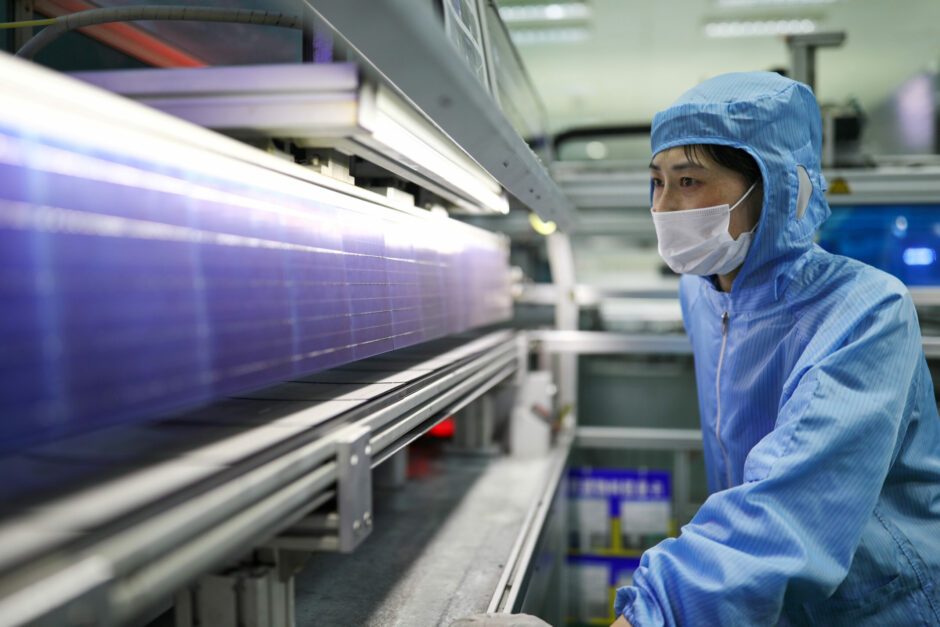
FILE PHOTO: An employee works at a solar panel production line in this file photo in China March 15, 2018. REUTERS/Stringer/File Photo

Chinese firms have committed some $80 billion in clean technology investments overseas over the past year as they sought new markets to absorb a supply glut, according to a report by Australian research group Climate Energy Finance (CEF).

Many countries also deepened their cleantech cooperation with China in the wake of US President Donald Trump’s tariffs, according to the report released on Sunday, bringing China’s total overseas direct investments in green technology to more than $180 billion since the start of 2023.

Chinese firms dominate supply chains for clean technologies such as critical minerals processing, solar panels, and batteries. Chinese foreign investment in clean energy infrastructure helps create markets for such products.

“China’s got a supply glut when it comes to green technology, like solar panels and batteries, because of a structural supply-demand mismatch, so they need overseas markets to absorb their products,” report author and CEF China engagement lead Caroline Wang said.

Opportunities for emerging markets

That also presents opportunities for emerging economies seeking to reduce their dependence on imported fossil fuels, Wang said.

Research from the Net Zero Industrial Policy Lab at Johns Hopkins University found that 75% of China’s low-carbon foreign direct investment is in Asia, the Middle East, Africa, and Latin America.

Southeast Asia remained the top destination for Chinese cleantech manufacturing investments, the CEF report found. There were fewer new solar manufacturing investments there because of U.S. tariffs, but more Chinese investments materialised in renewable power, EVs, and batteries.

The Middle East and North Africa were the fastest-growing investment destinations, driven by national strategies for diversifying away from oil.

Chinese firms increasingly favoured large-scale projects integrating upstream and downstream supply chains, CEF found.

Among the biggest new projects were an $8.28 billion green hydrogen project announced by solar firm Longi Green Energy in Nigeria, and a $6 billion battery factory that CATL is building in Indonesia.

Another incentive for emerging economies is “not wanting to miss out on this technological revolution,” Wang said.

“China’s leading the world in the technologies, in the innovation, and if you don’t get into the supply chain quickly, there’s a risk you miss out on innovation opportunities.”

Reuters

Bring stories like this into your inbox every day.

Sign up for our newsletter - The Daily Brief
Subscribe to Newsletter


This is your last free story for the month. Register to continue reading our content