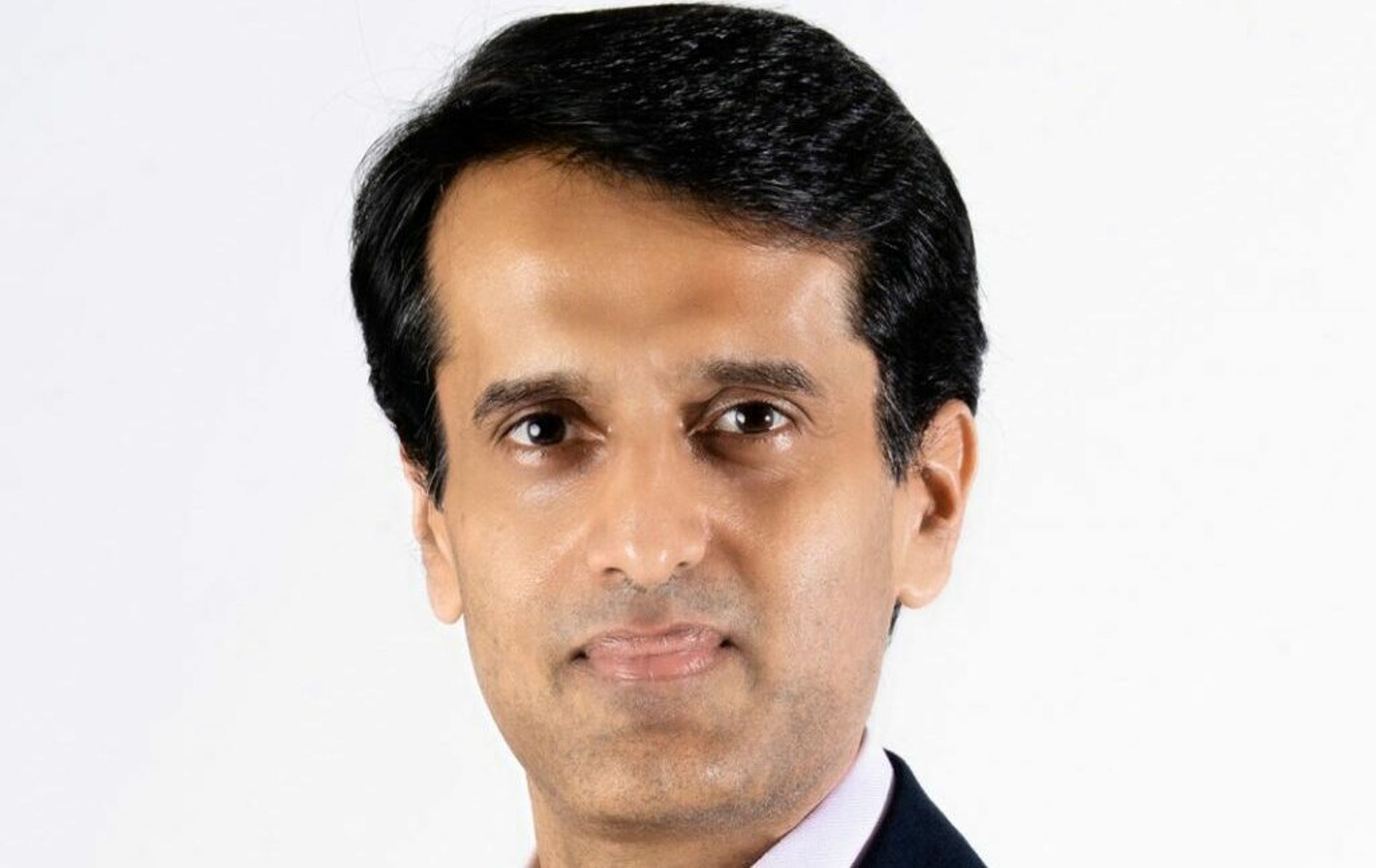
(The author, Kabir Narang, is the founding partner of two global investment firms.)
“History is shaped not by smooth curves, but by long stretches of stability interrupted by rare, decisive shifts.”
That thought stayed with me during my recent trips through Doha, Abu Dhabi, and Dubai—and from earlier conversations in Riyadh that still sit in my notebook. When you zoom out, the Middle East today resembles a system entering a state of punctuated equilibrium: quiet, deliberate institutional buildup followed by a sudden step-change in ambition, capital formation, and governance.
The region today is leaning into the hardest parts of building durable markets: scale, transparency, cross-border operating architecture, and long-term discipline.
The Gulf is no longer following global markets but converging with them
Over more than a decade of my trips to the Gulf—reinforced by time spent there this December—one change stands out. The Middle East has quietly built the prerequisites for a sustained liquidity engine.
Sovereign capital is no longer episodic; it is ecosystem-shaping. Institutions such as PIF, ADIA, Mubadala, QIA and regional pension pools now act as long-term industrial and digital architects, anchoring capital formation from within the region. Governance expectations have risen in parallel as boards professionalise, disclosure rhythms stabilise, and operators broaden their global perspective.
Institutions such as PIF, ADIA, Mubadala, and QIA now act as long-term industrial and digital architects.
A broader signal of the region’s focus on advanced technology is the way multiple Gulf states are positioning AI as a strategic priority rather than a standalone sector.
In Saudi Arabia, large-scale commitments to AI infrastructure, cloud capacity, and applied research—anchored by long-horizon sovereign capital—reflect an intent to build national capability at scale, not merely attract technology.
In the UAE, this institutional approach was underscored recently during Elon Musk’s visit, where discussions on artificial intelligence, advanced technology, and international collaboration brought together senior leadership and the Artificial Intelligence and Advanced Technology Council, highlighting an emphasis on long-term partnerships in frontier technologies.
Qatar has focused on integrating AI into priority sectors such as energy, logistics, and public services, combining global technology partnerships with a growing emphasis on governance and applied deployment.
Bahrain, meanwhile, continues to play a catalytic role as a regulatory and innovation sandbox, advancing digital-first frameworks that allow new technologies to be tested, adopted, and scaled efficiently across financial services and enterprise platforms.
Taken together, these approaches point to a shared regional shift: AI is increasingly being treated less as a speculative opportunity and more as sovereign infrastructure—governed deliberately, partnered globally, and scaled with multi-year intent.
Broader recalibration
That emphasis on scale and long-term discipline reflects a broader recalibration I have observed across Silicon Valley, Singapore and India.
As I wrote in a recent piece, belief in Silicon Valley functions as infrastructure—the quiet, collective conviction that turns ideas into institutions. It aligns ownership with ambition, accelerates learning cycles, and transforms proximity into execution. The conversations have moved decisively from valuation to craft, from growth-at-all-costs to proof at every step. The teams that endure are those where conviction compounds through execution faster than capital ever could.
India’s markets have offered a real-time case study. A few days ago, I wrote about the IPO of Meesho, not because of the listing pop, but because of what the market chose to reward. Investors priced discipline over narrative. They focused on unit economics that hold under scrutiny, transparent cohorts, tight contribution margins, and governance that scales when examined. After years in which capital subsidised experimentation, expectations hardened. Liquidity did not disappear; it simply repriced the cost of credibility.
Singapore occupies a distinct position as a connector between different ecosystems worldwide.
Singapore occupies a distinct position in this landscape; not as a replica of Silicon Valley, but as a connector between different ecosystems worldwide. Its strengths in governance, institutional trust and capital depth make it a natural platform where belief, discipline, and liquidity can intersect.
As its ecosystem matures through more exits, recycled capital, and globally-scaled founders, Singapore can increasingly function as connective tissue in a multi-polar technology and capital network.
A new liquidity regime: The rules are converging globally
Across San Francisco, Singapore, Mumbai, Riyadh, and Abu Dhabi, the rules for value creation are converging.
Markets are rewarding free cash flow—or a credible path to it—revenue durability, regulatory clarity, margin improvement, and governance that withstands scrutiny. What is emerging is a global playbook that allows sovereign allocators to compare resilience, not just growth trajectories, across regions.
The Middle East is entering the early phase of a new IPO cycle, with a measured pipeline of listings expected over the next two to three years, supported by patient sovereign capital, rising governance standards, and platforms reaching real operating scale.
The Middle East is entering the early phase of a new IPO cycle.
The companies that will define this phase are those with predictable profitability, resilient cohorts, multi-country footprints, and transparent liquidity pathways—the same qualities global investors have rewarded in India and are now demanding in Silicon Valley. This is not an adaptation driven by necessity, but progress built on structural strength, which is what makes the region’s liquidity window durable.
What makes 2025 a step-change rather than an incremental year is not capital availability, but a structural reordering of how markets allocate it. In India, this is visible in the return of deep, sustained liquidity, with public markets consistently backing companies that demonstrate durable unit economics, governance under scrutiny, and repeatable cash generation rather than headline growth alone.
In Silicon Valley, the shift is being driven by belief expressed through action. The past two years have seen one of the largest capital expenditure cycles in technology history, as hyperscalers and frontier AI companies commit tens of billions of dollars to compute, power, and infrastructure. This is a conviction embedded in balance sheets. Ambition now carries a higher burden of proof, where scale must be matched by technical depth, execution velocity, and systems that hold under real-world load.
Singapore sits at the intersection of these shifts. With its foundation of governance, regulatory clarity, and institutional trust, it is emerging as a hub where global capital and operating discipline meet cross-border ambition. As markets reset, Singapore is leaning forward with initiatives underway to expand listings help and work towards becoming a place where one can build and set up companies with a global lens
In the Gulf, momentum is building in parallel. Institutions are adapting at pace, governance frameworks are tightening, and sovereign capital is being deployed with long horizons and clear intent. Platforms are being built for regional and global scale from the outset. This is how functional markets form: when discipline becomes endogenous, and ambition is matched by operating rigour. The Gulf is no longer asking whether it can build liquidity. It is focused on how to sustain it.