Partner content in association with
How innovation, accessibility and flexibility are driving a renaissance in Japanese ETFs


Recent initiatives by the Tokyo Stock Exchange (TSE) have positioned exchange traded funds (ETFs) as among the preferred vehicles to access Japan’s equities markets.
Japan ETFs: Expanding Horizons across Asia played host to presentations and a series of discussions on specific strategies to help investors, whether institutional, retail, or global, to maximise the potential of this asset class.
The event was held on November 14, 2025, and hosted by the Japan Exchange Group (JPX) and the Japan External Trade Organization (JETRO) in partnership with Nikkei Group Asia.
ETFs at a pivotal juncture
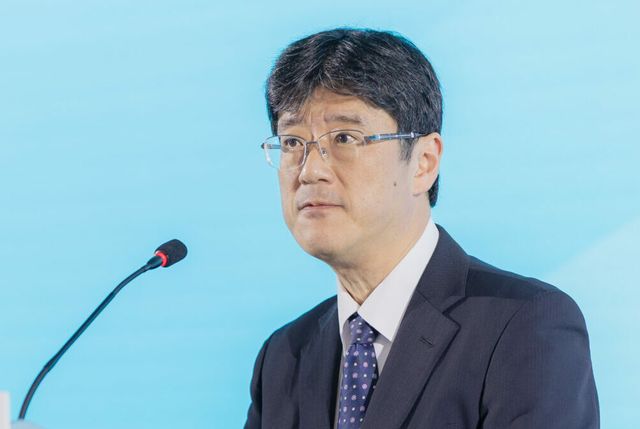
Hiroki Kawai Senior Executive Officer & CFO, Japan Exchange Group set the tone for the discussions and said, “The ETF market in Asia stands at a pivotal juncture, as can be seen in the growth of the Japanese ETF market that is marked by rapid innovation, increasing investor sophistication, and cross border investment.” He emphasised the importance of transparency, efficiency, and collaboration for sustainable growth and to evolve the financial landscape.
The growing equities market in Japan
The Nikkei 225 surpassed ¥50,000 ($320) for the first time this year. However, Kenji Abe, Chief Strategist, Daiwa Securities Tokyo believed this is just the beginning and expects Nikkei 225 to reach above ¥57,000 ($365) in the next fiscal year.
Abe highlighted the factors driving this growth which include Japan moving past a period of zero inflation, with price hikes resulting in an increase in earnings; domestic companies faced with labour shortages investing heavily in new factories and IT systems; and a heightened demand for semiconductors which positively impacted the entire supply chain. Initiatives from the TSE to improve governance were also having a positive impact.
Why ETFs are emerging as an optimal investment option
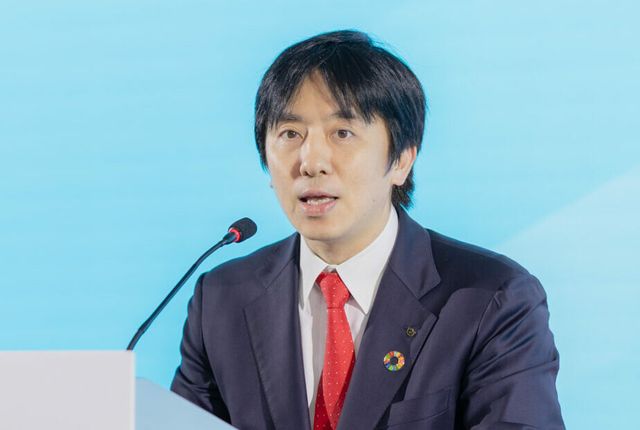
Outlining the factors contributing to the growth of ETFs, Kei Okazaki, Head of ETF Secondary Market, Tokyo Stock Exchange said, “TSE has the cheapest, largest, and widest variety of ETFs which provide good exposure to Japanese equity positions.” The product lineup was dynamic, as demonstrated by the recent addition of active ETFs. The final element in the mix was TSE’s RFQ (request-for-quote) platform CONNEQTOR which provided direct access to market makers and facilitated quick trading.

Making Japanese ETFs accessible to the world
With the US indexes performing below expectations, even as other markets have fared better, investors are seeking a diversification strategy. Not just global investors, but even those within the US are looking further afield.
Anson Chow, Director, Institutional Sales & Trading, Jane Street Hong Kong observed, “The equity performance in Asia, and particularly Japan, continues to attract not just Japanese but regional and global investors.”
Okazaki pointed to the changing profile of investors in ETFs and said, “Traditionally, the biggest users were institutional investors, mainly local banks. The key drivers now are global and retail investors, with strong inflows from overseas, particularly across Asia.”
Ogar Widjaja, Head of Xtrackers Sales, Southeast Asia and Intermediaries, DWS said, “This year we are seeing global investors diversifying from the US equities, for example MSCI Japan is up around 25% this year, versus S&P500 at around 15%. While Japan ETFs could be listed anywhere globally, inflows into these ETFs eventually translate into the Japanese market because the ETF buys the underlying stocks which are listed in Japan.”

As Japanese ETFs gain broader appeal, U-Jin Lim, Director, Head of Equities APAC, Tradeweb who was moderating the panel observed that greater access to international investors ought to become a priority. Okazaki elaborated on the initiatives taken to provide access to the TSE, the home market for Japanese equities via ETFs, and said, “We launched CONNEQTOR in 2021 to give institutional investors access to deep liquidity. CONNEQTOR is used by investors in Japan and abroad, offering direct access to market makers and cost-efficient execution.”
There is a rising demand from the TSE for innovation and more sophisticated products that align with global megatrends. Okazaki said, “We are planning to allow synthetic ETF listing, probably next year. We would like to provide varied and sophisticated products at a reasonable cost to investors and must invite more issuers, especially global issuers.”
Capturing Japan’s upside: Macroeconomic trends and the TSE ETF opportunities
Among the reasons driving interest in the Japan market is a shift in market fundamentals: a three-decade long cycle of deflation winding down, interest rate normalisation, and corporate governance reforms. Ivan Wong, Head of SEA iShares Institutional Distribution, BlackRock said, “This year, we have continued to see flows into Japan ETFs. The overall sentiment that we are seeing from non-Japanese institutional investors remains positive.” This shift, he added, was reflected in how some investors were investing in Japan: from being a subcomponent of the MSCI World where it made up 5% to 6%, to a more standalone or targeted investment opportunity. He said, “The key message is renewed interest from institutional investors using our Japanese-domicile ETFs to express both strategic and tactical views.”
Highlighting the reasons for the popularity of ETFs, Masaki Sugihara, Senior Executive, ETF Promotion Center, Product Div., Asset Management One said, “Asia has a significant advantage in real-time trading flexibility during trading hours. Investors can adjust their positions easily and quickly when the market suddenly changes. Professional clients have been shifting their position from unlisted private funds to ETFs.”
Initiatives like the RFQ platform CONNEQTOR were helping on the liquidity side with institutional clients finding it indispensable.

Responding to a query from moderator Ayla Wagatsuma, Senior Manager, Corporate Communications, Japan Exchange Group, on how investors could take advantage of this positive environment, the panellists drew attention to investment themes that were gaining ground. Shuntaro Nagashima, Senior Managing Director, Marketing Division, Daiwa Asset Management said, “We have seen a huge demand for high dividend ETFs. We also see a significant opportunity in J-REITs. With the economy transforming and wages going up, the real estate market is extremely strong. However, J-REITs have been overlooked. The asset value is at a significant discount to where it should be.”
For its part, BlackRock is focusing on bringing investors a range of different and innovative exposures and a choice of listing venues. Wong highlighted Japan government bonds (JGBs) and said, “If you want to create a granular global aggregate bond portfolio, you can have JGBs as a sleeve or building block. You can do this with ETFs. The menu of ETFs are expanding for investors and in many cases, we have seen that our Japanese-domiciled ETFs have been giving investors the cost efficiency that they continuously seek.”
Evolving and diversifying Japanese equity ETFs: Efficient solutions for international portfolios
“I expect a future where ETFs become the most mainstream investment for retail investors in Japan,” said Shin Sawada, Senior Investment Director, Sumitomo Mitsui Trust Asset Management, speaking at the final panel of Japan ETFs: Expanding Horizons across Asia.
Moderating the session, Kaori Ohmura, Senior Manager, ETF Market Development, Tokyo Stock Exchange queried the panel on key trends driving the diversification of TSE-listed ETFs and the best utilisation scenarios.
Sawada believes new products could make the market more appealing for new investors. He said, “Discussions are underway on the potential introduction of crypto asset ETFs. They could further diversify the market and attract new types of investors.”
High dividend ETFs are highly recommended by Yushun Mizusaki, Head of Product Strategy, ETF Solution Department, Nomura Asset Management. He said, “High dividend stocks are among the most attractive investments for retail and institutional investors. There are currently about 20 Japan high dividend ETFs, both passive and active. Investors enjoy a wide range of choices. Compared with individual stock picking strategies, ETFs are the easiest and most efficient investment vehicle from a portfolio diversification perspective.”

Against the backdrop of structural changes, Sawada recommended looking past indexes which include both rising and declining stocks. Instead, sector specific or stock selective strategies can offer better outcomes. He said, “In 2025 we have seen a sharp rise in defence related and AI-focused investment. Targeted ETFs which focus on specific industries or themes can be a powerful tool for investors seeking exposure to a high performing segment.” Acknowledging that not all investors can monitor the market closely or trade reflexively, he recommends active ETFs for those who prefer a more hands-off approach but still want active management. He said, “Since their approval in 2023 there are now 23 active ETFs on TSE. Over time, these products will become more mainstream.”
Among the sectors, Mizusaki recommends are banks and trading companies. He said, “Bank stocks have long been a safe hub with relatively high dividend yields. Trading companies are attracting attention. Since Warren Buffett disclosed investment in trading companies in 2019, he now owns roughly 8% to 10% of five major Japanese trading companies.”
Tatsuro Toyodome, Product Manager, ETF Business Development Department, Amova Asset Management remarked on the increase in thematic and gold ETFs as more retail investors enter the Japanese market. He recommended investment strategies based on currency outlook and said, “Currently, Japan yen rates are very low, and US treasury rates are very high. When JPY gets stronger and US interest rates get lower, you will receive both income and capital gain.”